
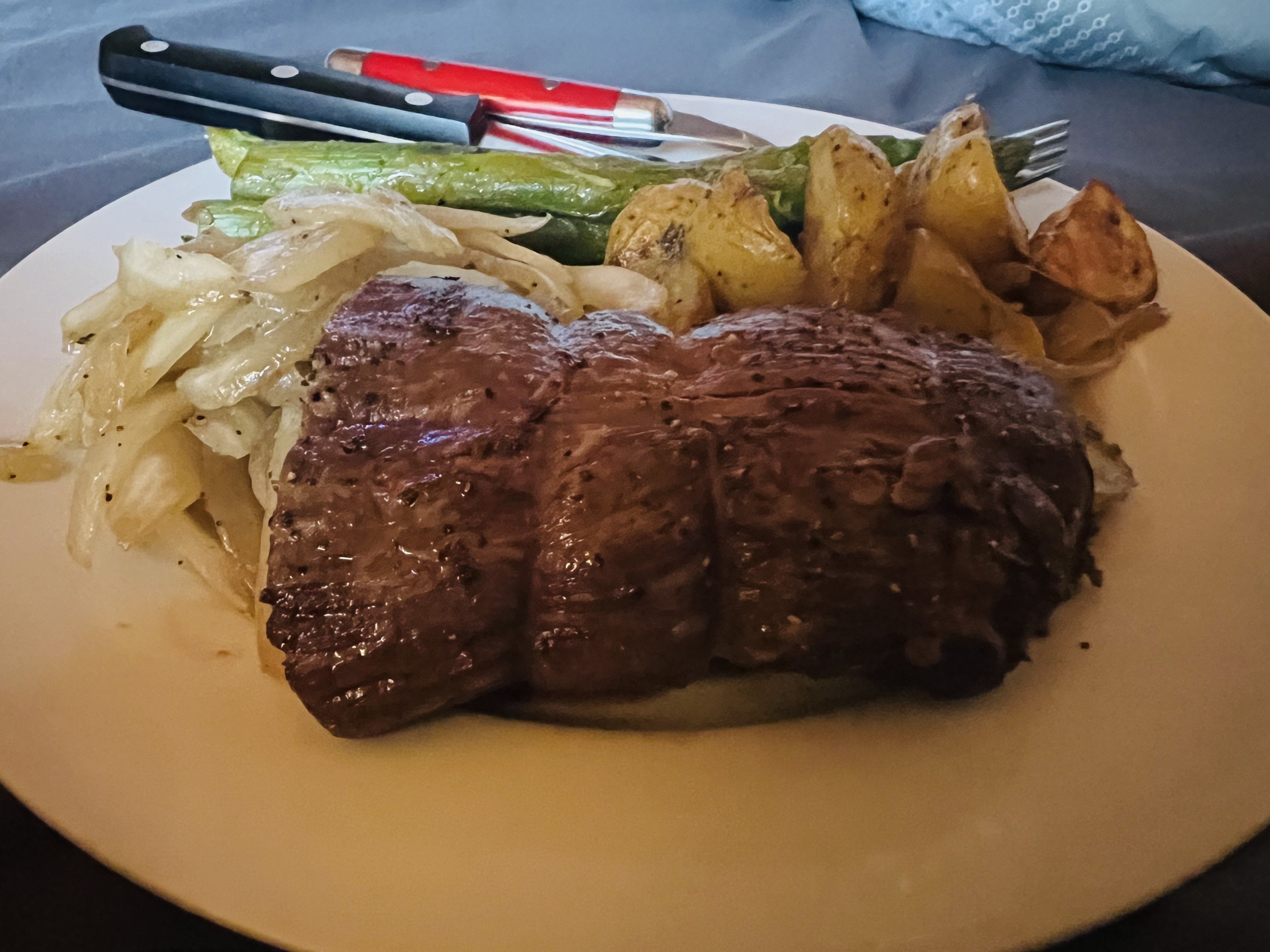
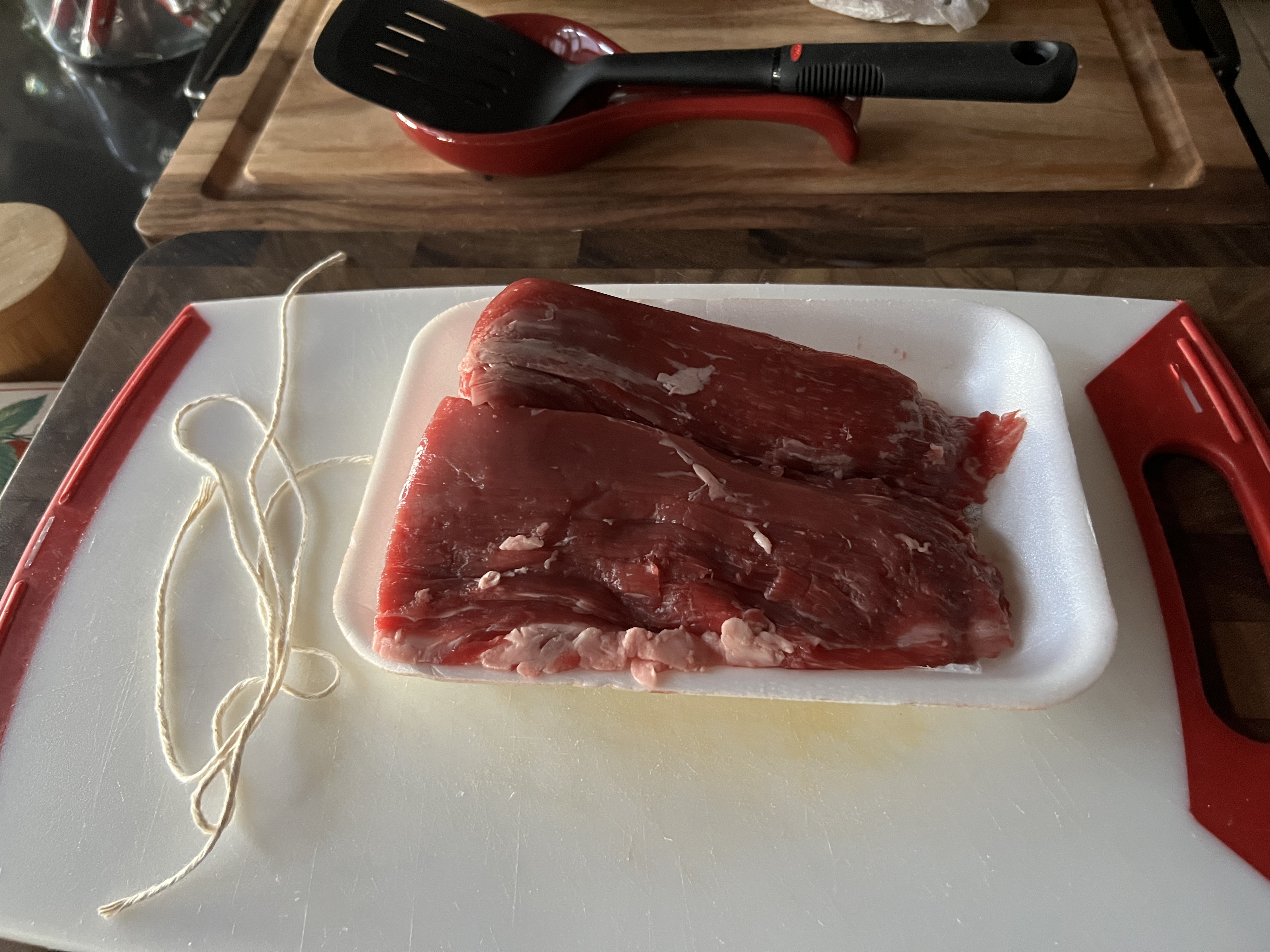


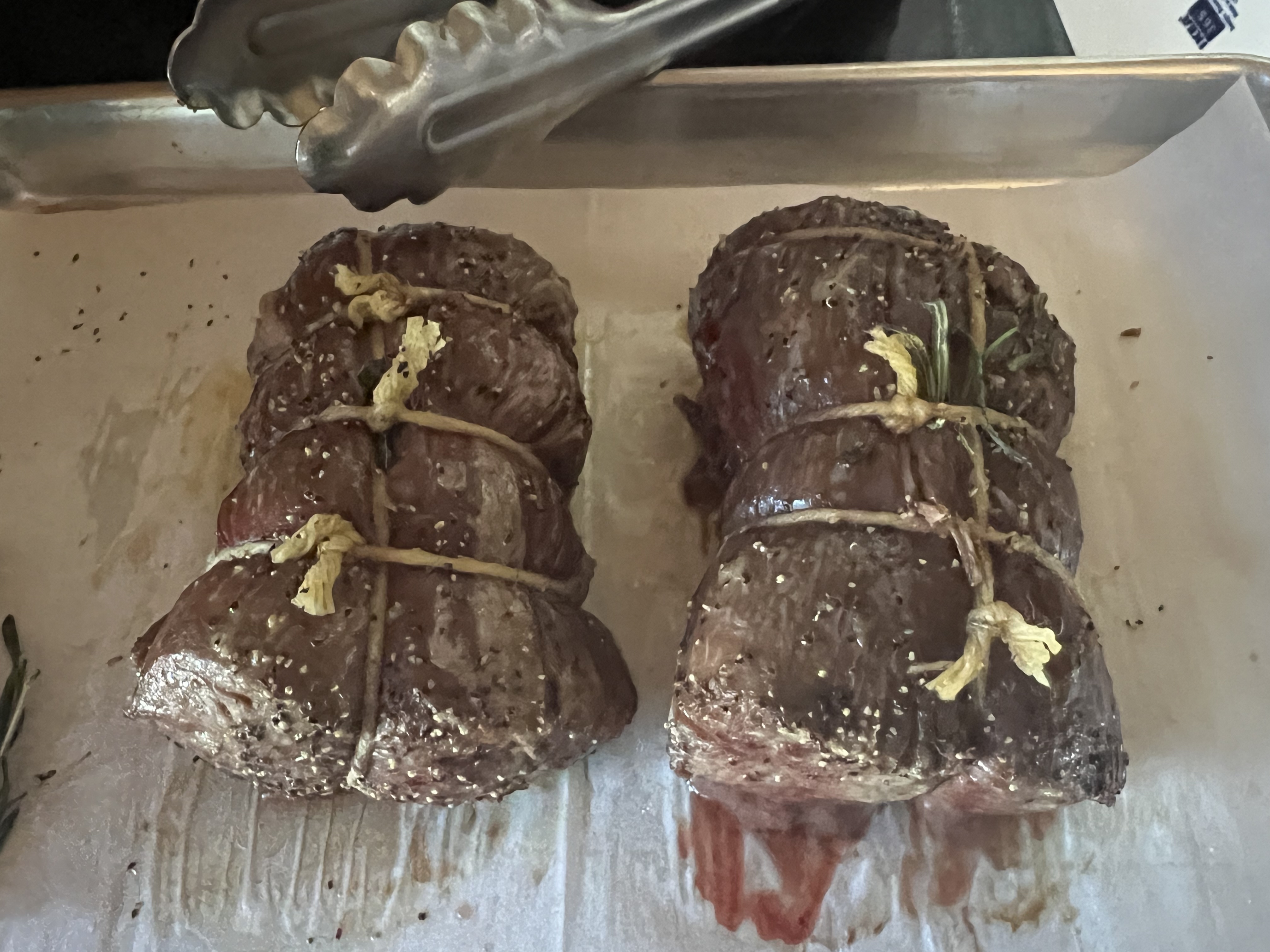

Slow-roasting and reverse-searing a beef tenderloin is my preferred method for cooking this cut of meat. Recently, I saw two ends of a beef tenderloin at the grocery store. The price was like half of those center-cut pieces in the meat case. Now there’s no difference in the meat; it’s just the ends of the tenderloin.
This method will guarantee your beef tenderloin comes out perfect every time. Let me explain.
Equipment: 1 (12-inch) cast-iron skillet, 1/4 sheet pan, chef’s knife, kitchen string, oven thermometer, digital meat thermometer
Preheat the oven to 275°F
Use an oven thermometer to be sure your oven temperature is accurate.
First, I like to trim away any unwanted fat.
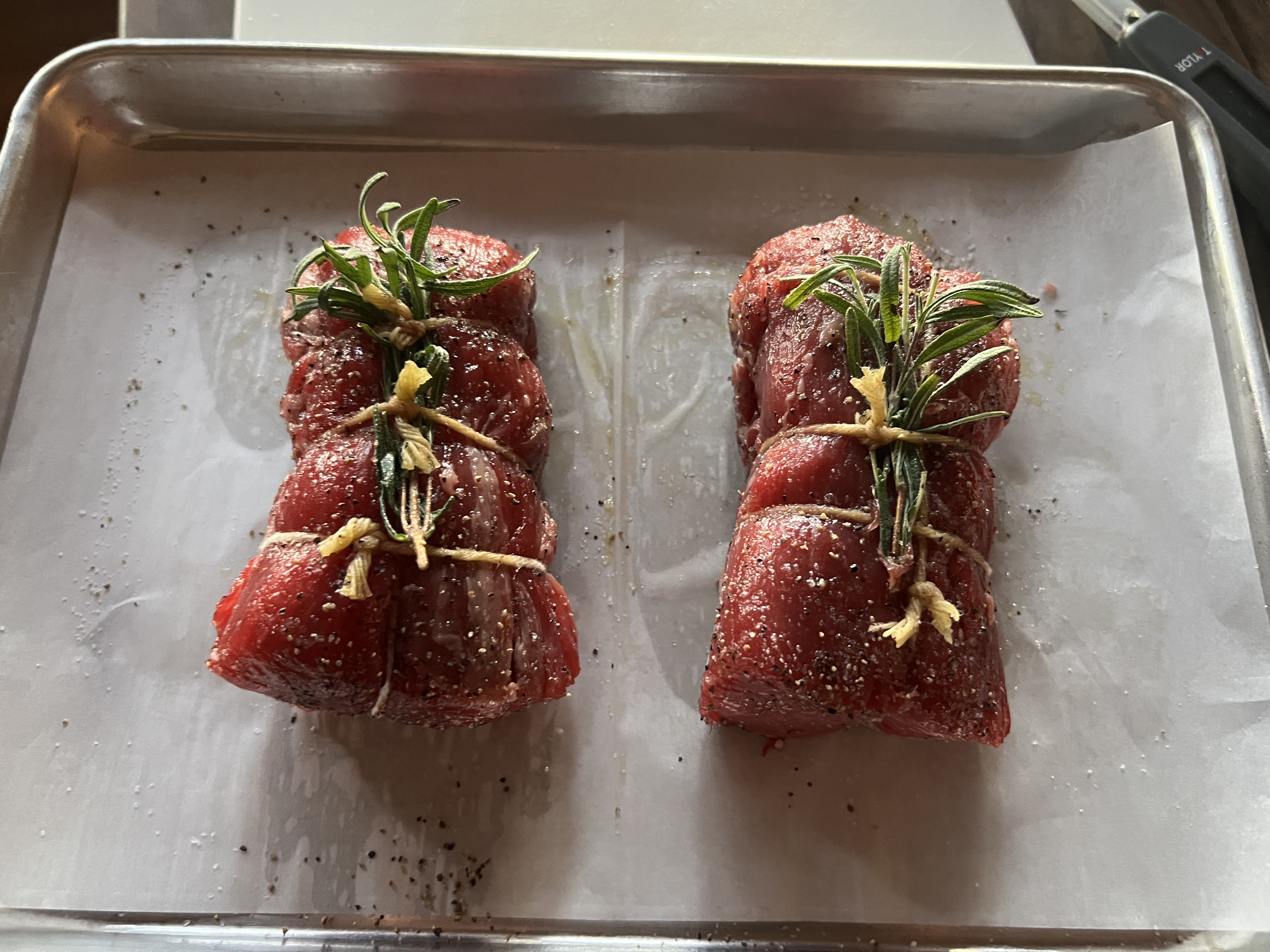
Place the filets on a sheet pan and pat them dry with paper towels. Brush the filets all over with the olive oil. Sprinkle them all over with 1 1/2 tablespoons of Kosher salt and 1 teaspoon of freshly ground black pepper, divided evenly.
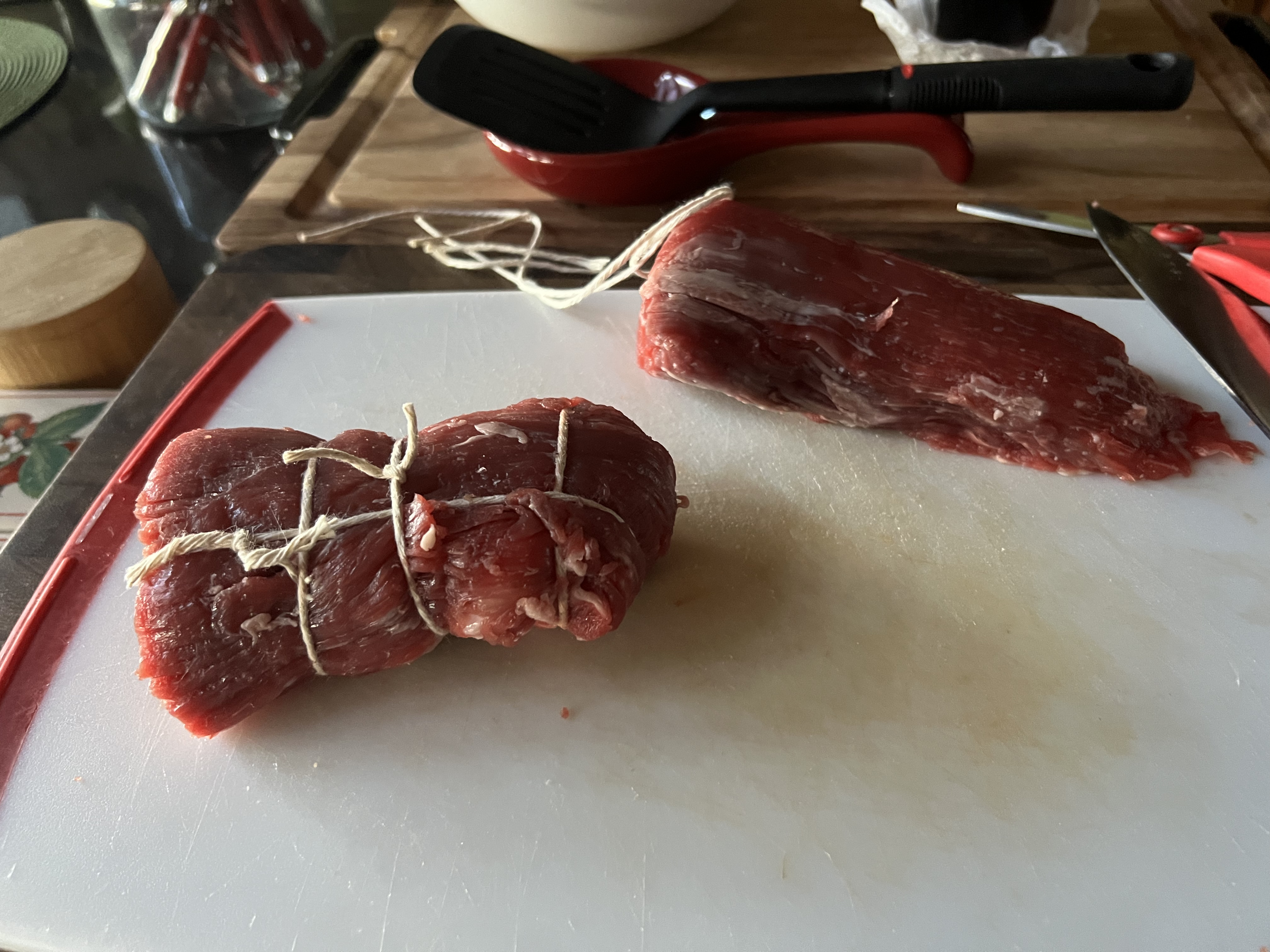
The ends need to be uniform in thickness so they will cook evenly. I fold the thin end under and tie those ends off first. Next, I take a longer piece of kitchen string and go underneath the entire filet lengthwise, tying it off before continuing to tie the rest of the beef in two more places.
Place the sprigs of rosemary underneath the string. Then brush the rosemary with 1/2 a tablespoon each with olive oil.
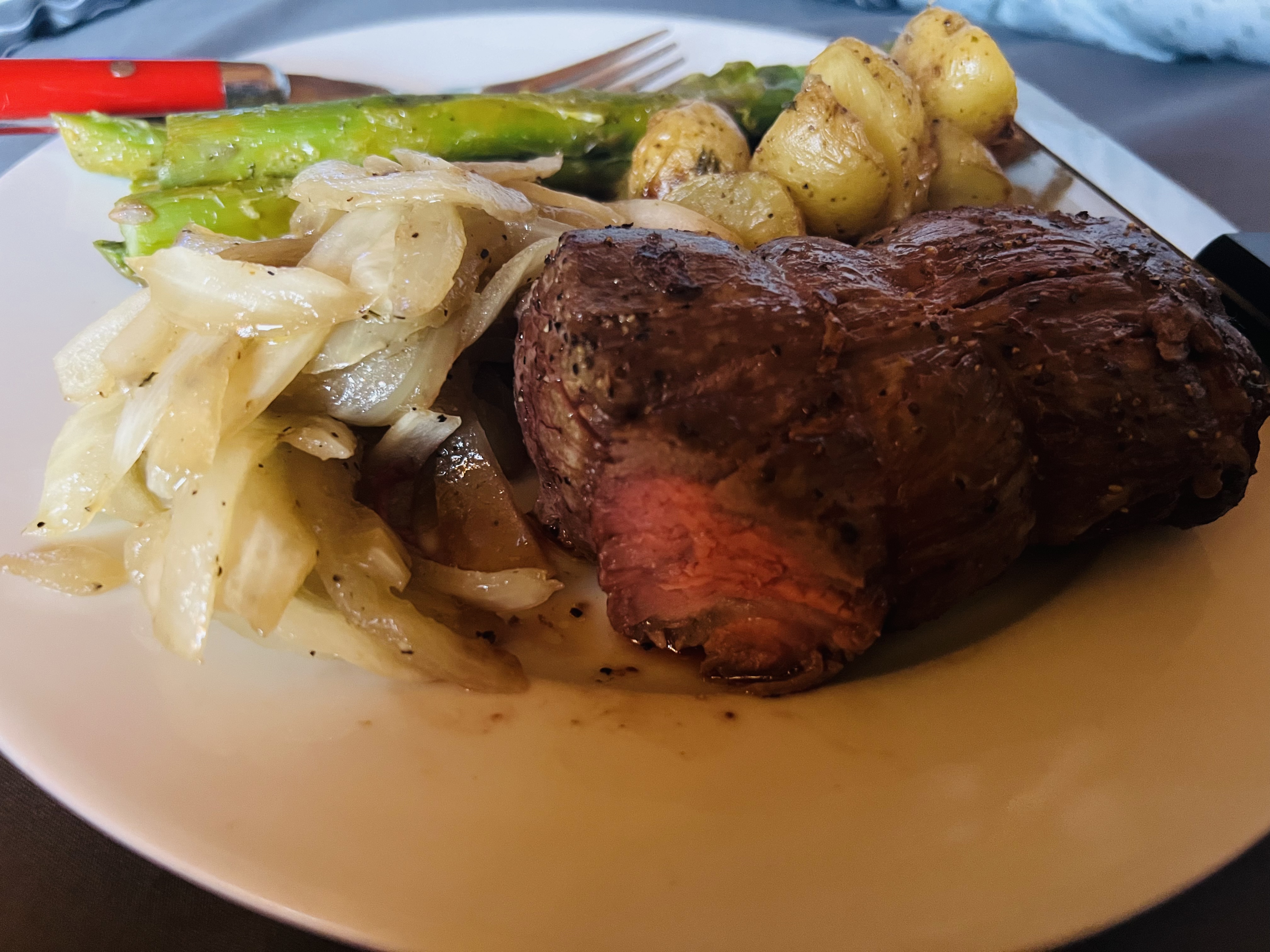
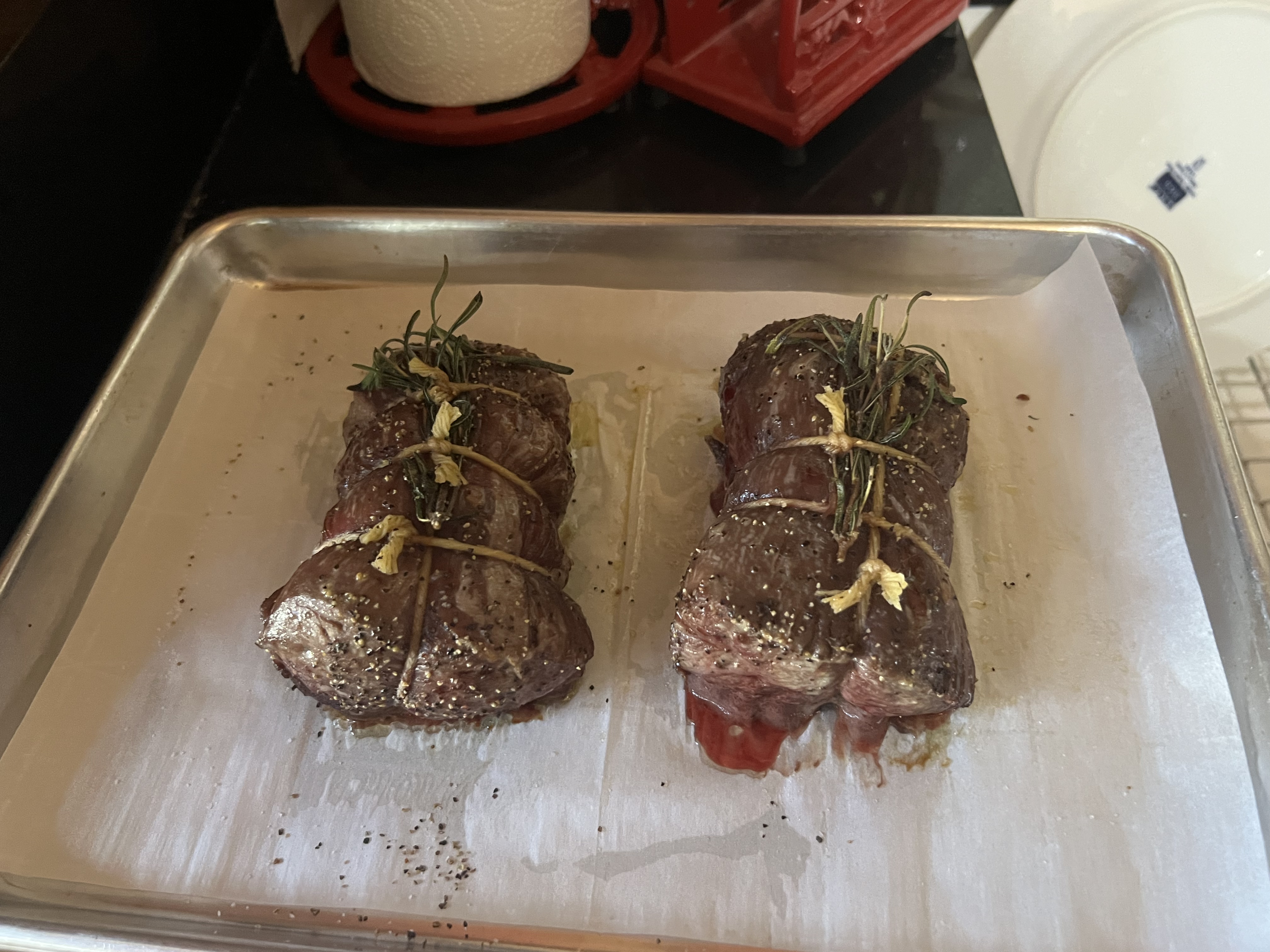
Roast the beef filets until the temperature registers 125° in the center. Each piece of beef is approximately 8 ounces, so the cooking time in the oven may range from 20 to 30 minutes. I place a digital meat thermometer horizontally through the end of the beef. The filets will be rare at this point, but they still need to be seared in a very hot cast-iron skillet for 1 minute per side to get that beautiful crust on the outside. I’m looking for the internal temperature to reach 130° after searing. Then the meat needs to rest for 5 minutes underneath a piece of aluminum foil, allowing the juices inside the meat to redistribute before you slice into it. Also, there will be what’s known as “carryover cooking”, bringing the temperature up to 135°. This will give you a perfect medium-rare throughout when you’re ready to slice into it.
There you have it, my Slow-Roasting And Reverse-Searing Beef Tenderloin
Note:
The cooking time in the oven will vary depending on the size of the beef tenderloin. You still want the temperatures to register 125°F when it comes out of the oven, and before searing the outside.
https://lindalouhamel.com/2019/07/10/summer-time-flowers-and-herbs/