

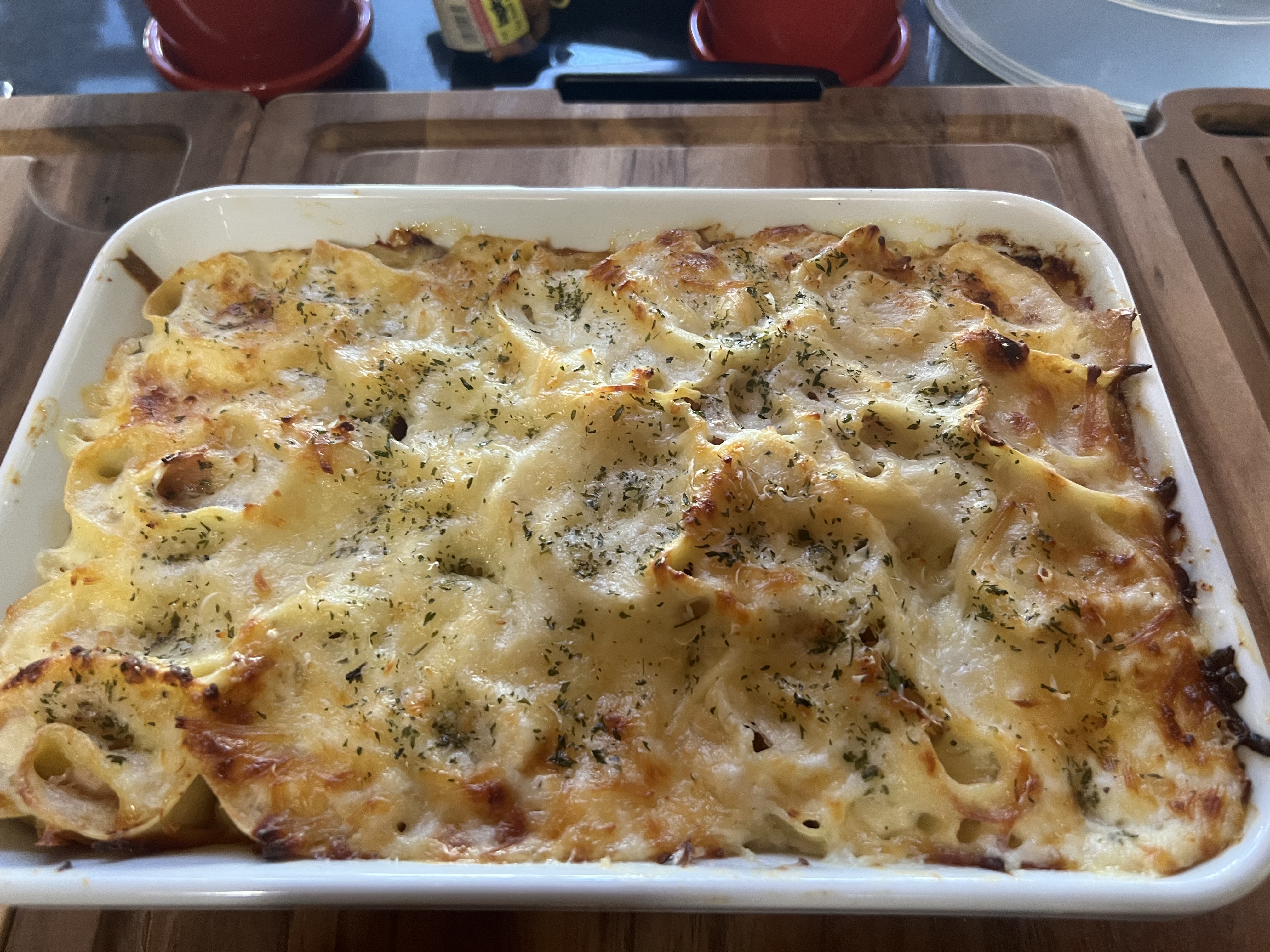
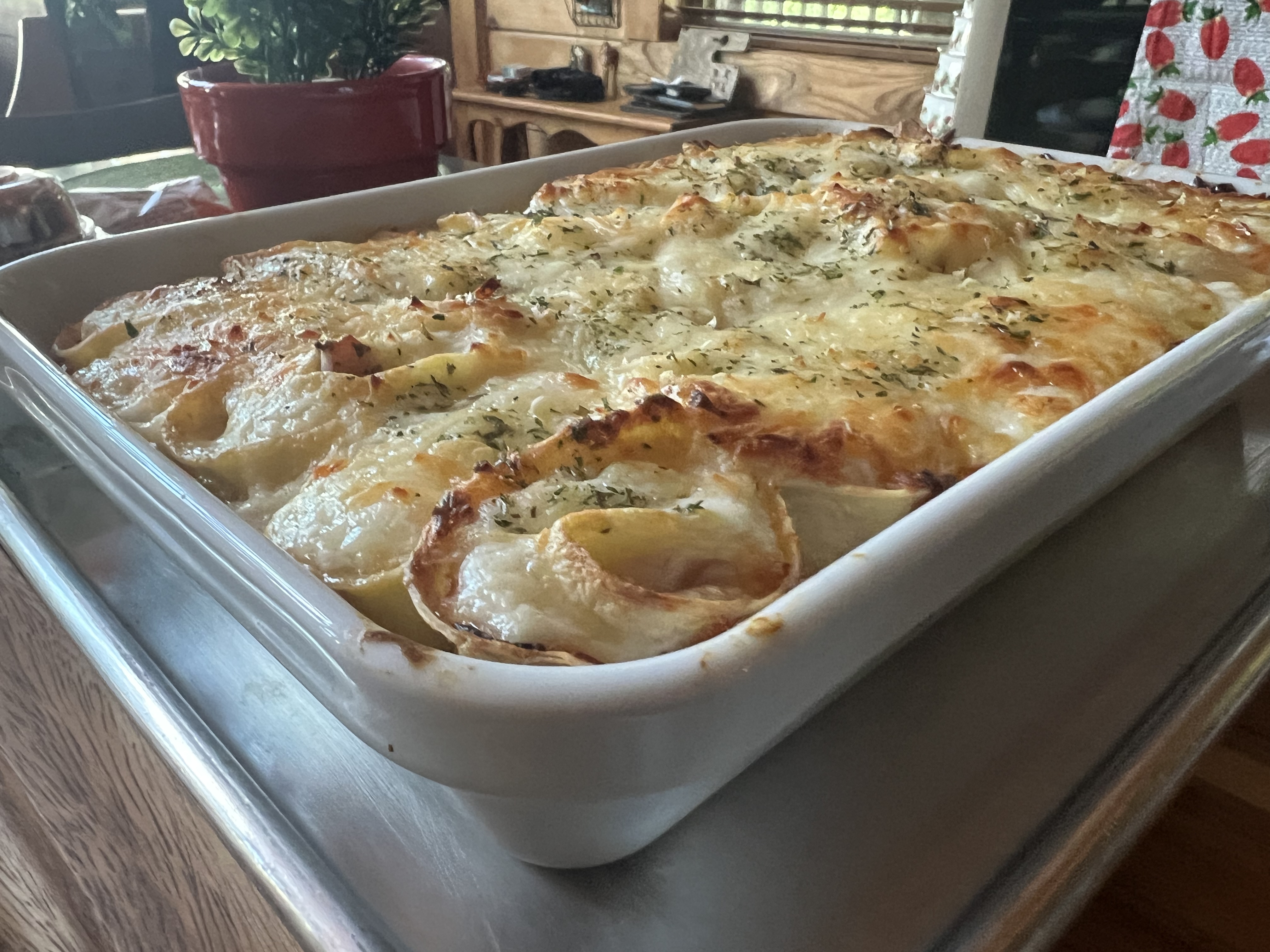
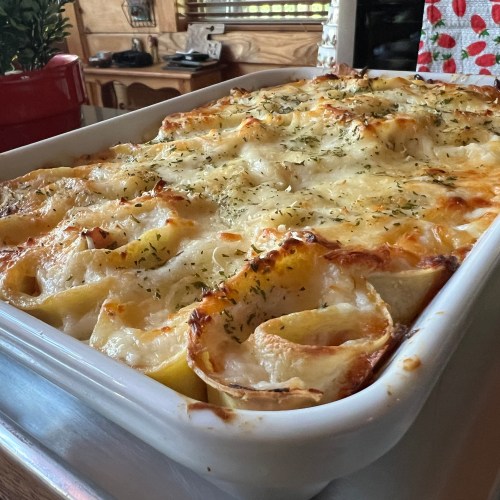
My Rosette al Forno is a dish made with great care and so much love. There are 3 major components in this dish, and each takes a bit of time to do. Don’t worry, I’ll explain each one in detail. I’m using a shortcut (fresh, pre-made pasta) to make this dish less stressful. Making homemade pasta for this dish, I would argue, is to make this recipe as it was originally intended. If you have the time, yes, definitely make the pasta from scratch.
Rosette al Forno can go by a variety of names:
Rosette Modenesi
Roselline al Forno
Rose di Lasagne al Forno
Le Rosette di Modena
Rosette al Prosciutto












Prep Time: 40 to 50 minutes (This time includes making the béchamel sauce and *blanching pasta.)
Cook Time: 30 to 40 minutes
Total Time: 1 hour 30 minutes
Yields: 8 to 10 servings
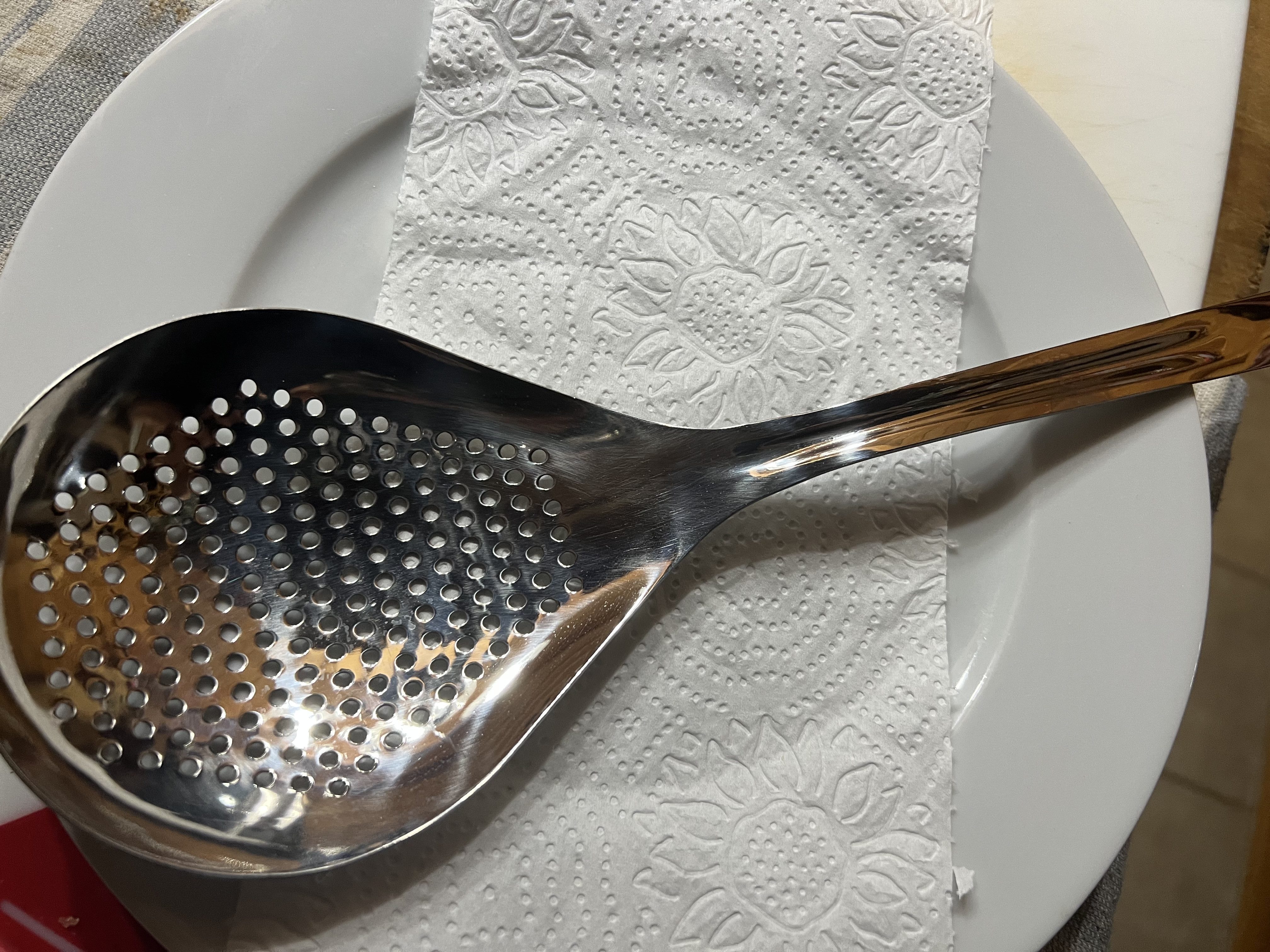
Equipment: 1 (8 x 10) baking dish, chef’s knife, cutting board, 1 (3-quart) sauce pot, 1 (6-quart) stock pot, whisk, silicone spatula, large mixing bowl, large tongs, flour sack towel, large slotted pasta spoon, 1 (1/4 size) sheet pan, offset spatula, 1 (10-cup) food processor
Ingredients:
For the pasta:
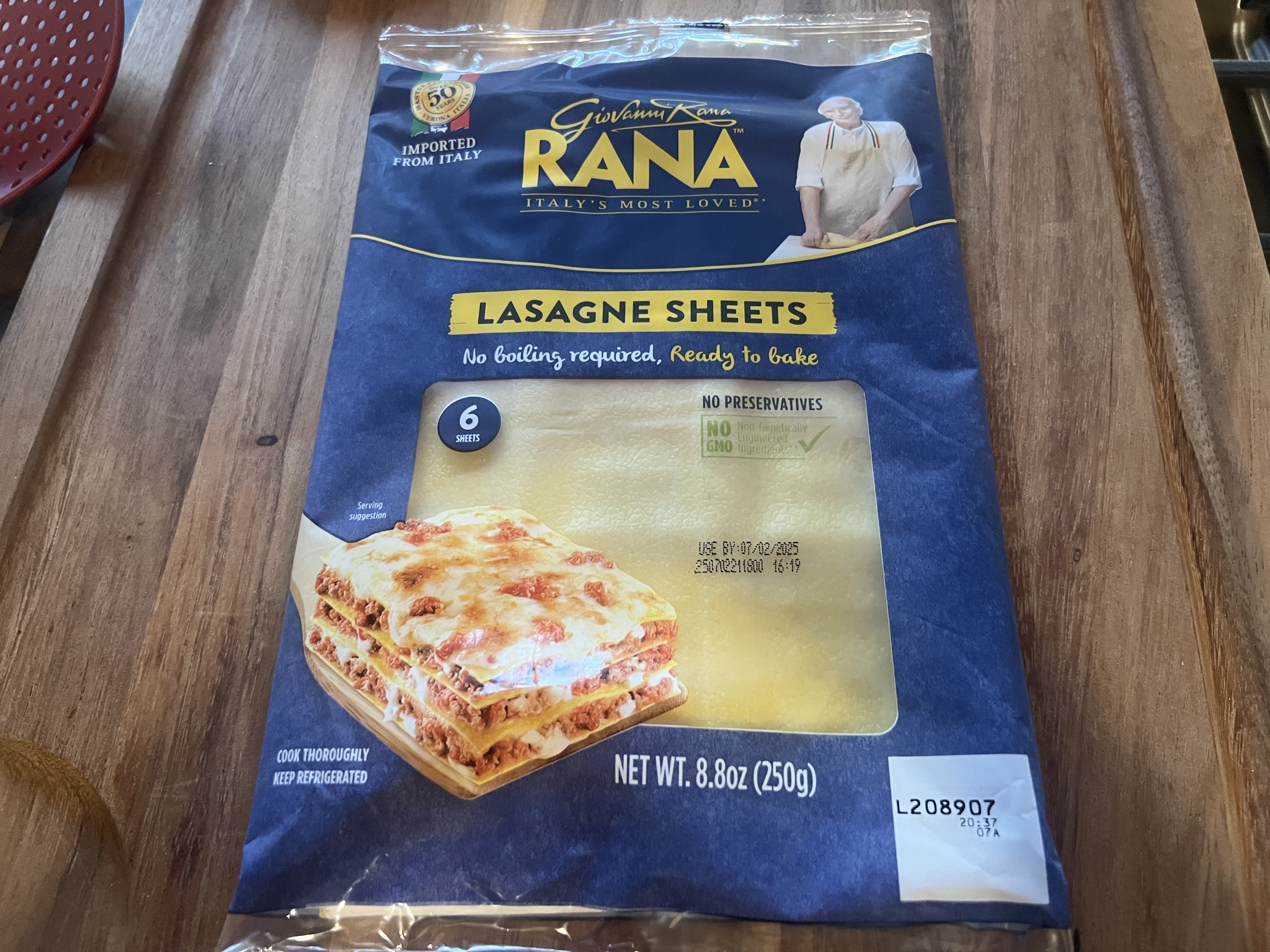
5 sheets of Rana lasagne fresh pasta, substitute homemade pasta, see notes
1/4 cup Kosher salt, divided, 1/8 cup for pasta cooking water and 1/8 cup for ice bath
For the Filling:
10 slices of Mortadella, thinly sliced
5 slices of prosciutto, thinly sliced
5 slices of cooked ham, thinly sliced
10 slices of Provolone, non-smoked and thinly sliced
1 (8-ounce) package of Fontina cheese, see notes
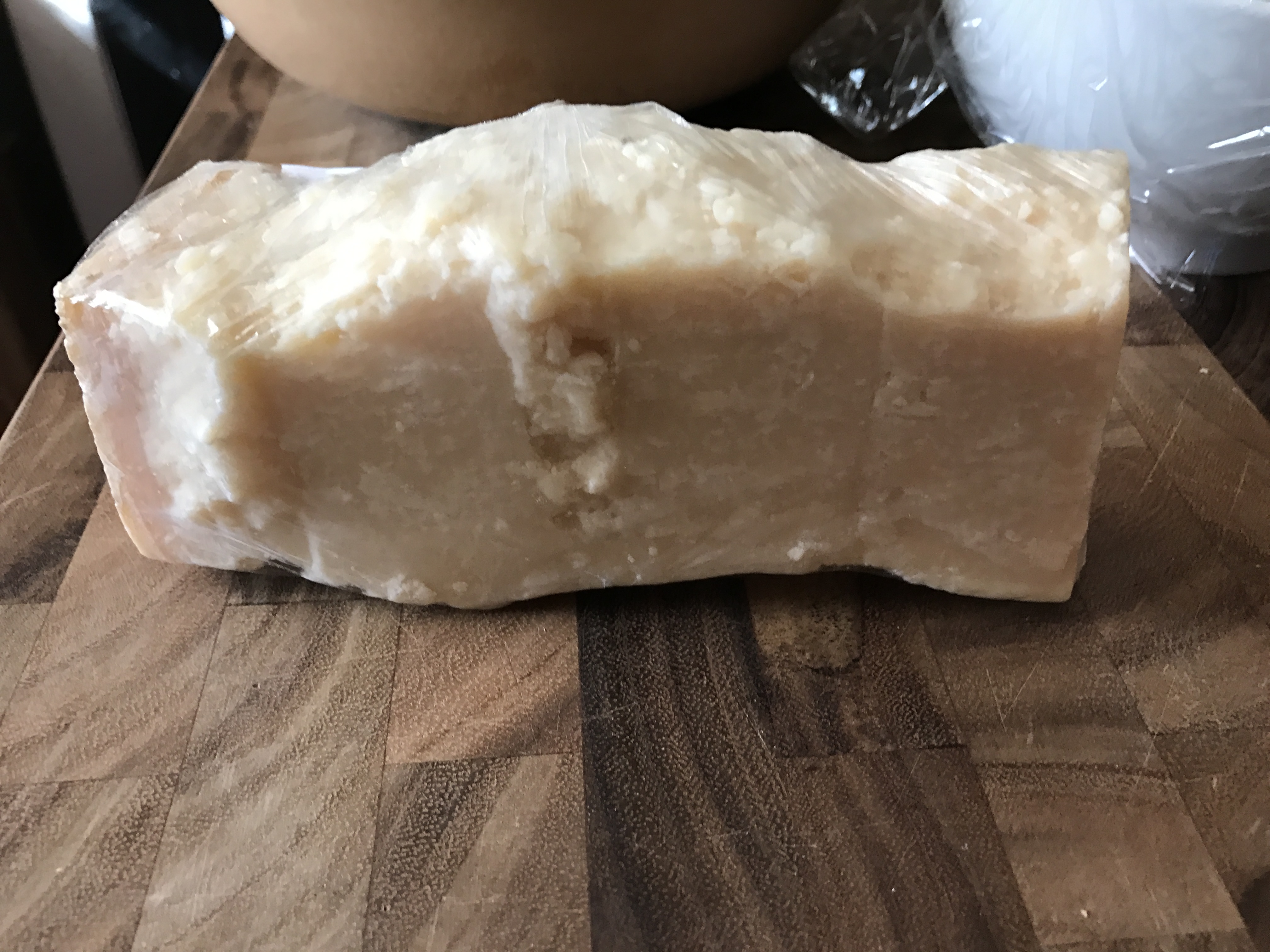
3/4 cup of Parmigiano Reggiano cheese, freshly grated, reserve 1/4 cup for the top
1 (8-ounce) package of shredded Mozzarella cheese
For the Béchamel:
3 ounces (6 tablespoons) of butter, unsalted
3 ounces (6 tablespoons) of flour, “00” or unbleached all-purpose
1 quart of whole milk, room temperature
1/4 teaspoon of freshly grated nutmeg
1 teaspoon of Kosher salt
1/2 teaspoon of freshly ground black pepper, substitute white pepper
Garnish:
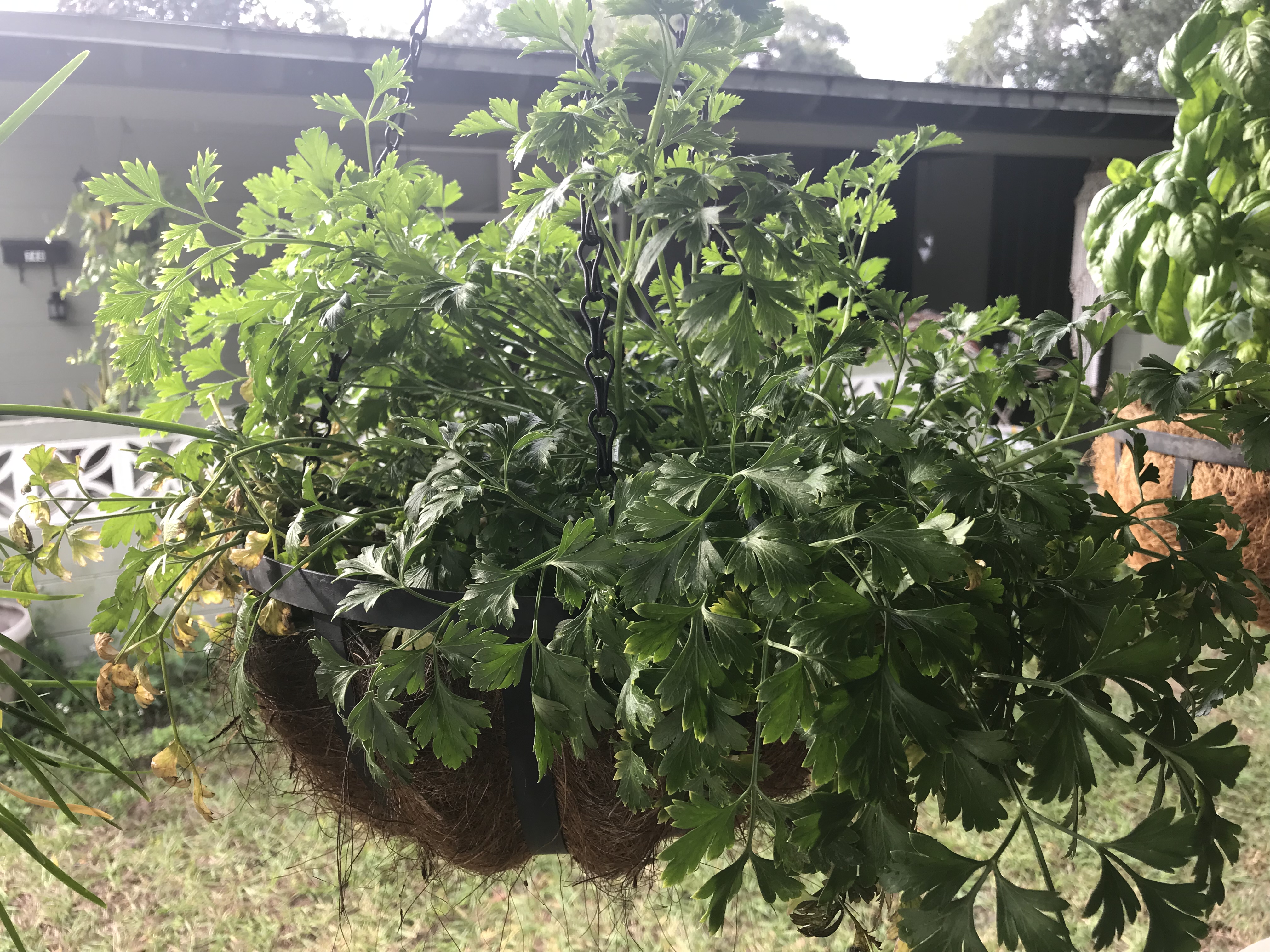
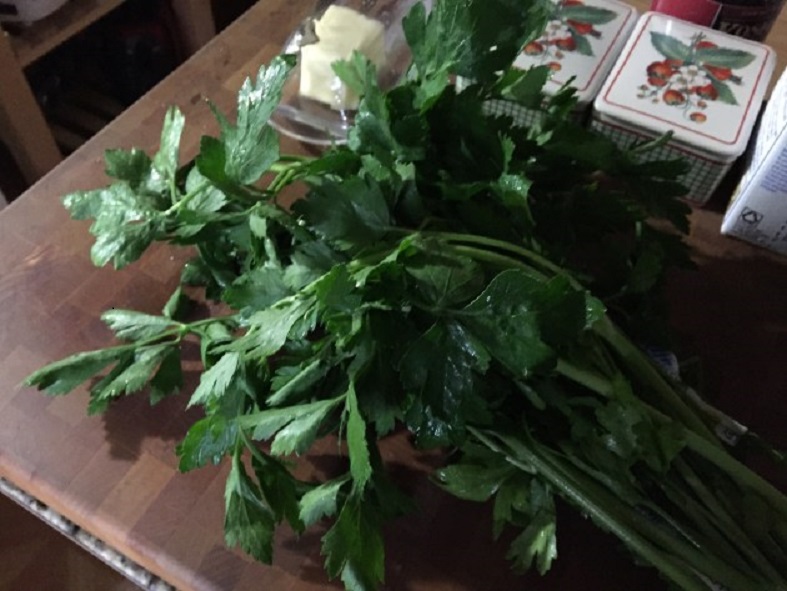
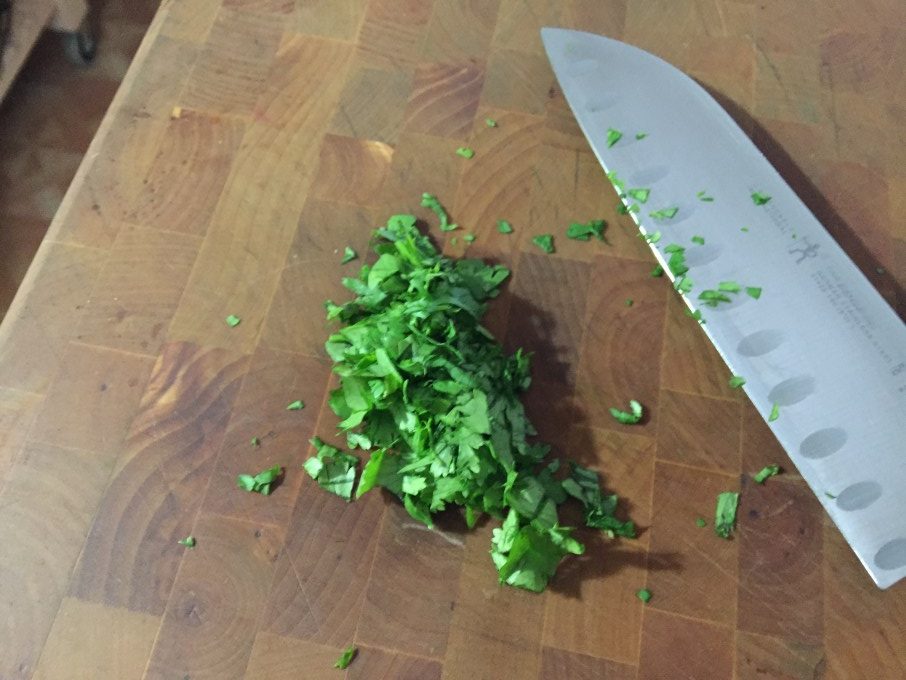
2 tablespoons of Italian flat-leaf parsley, finely minced
Instructions:
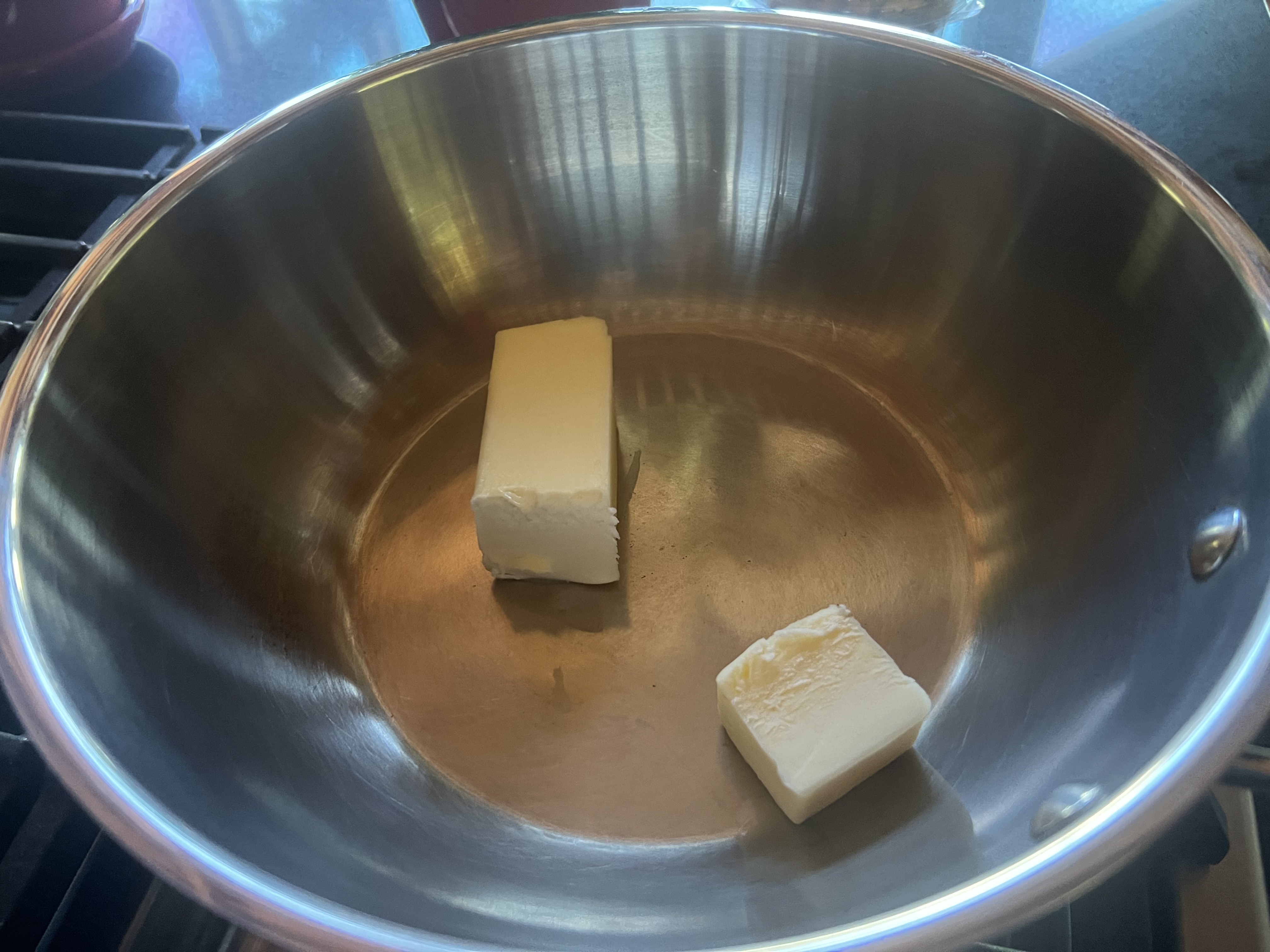
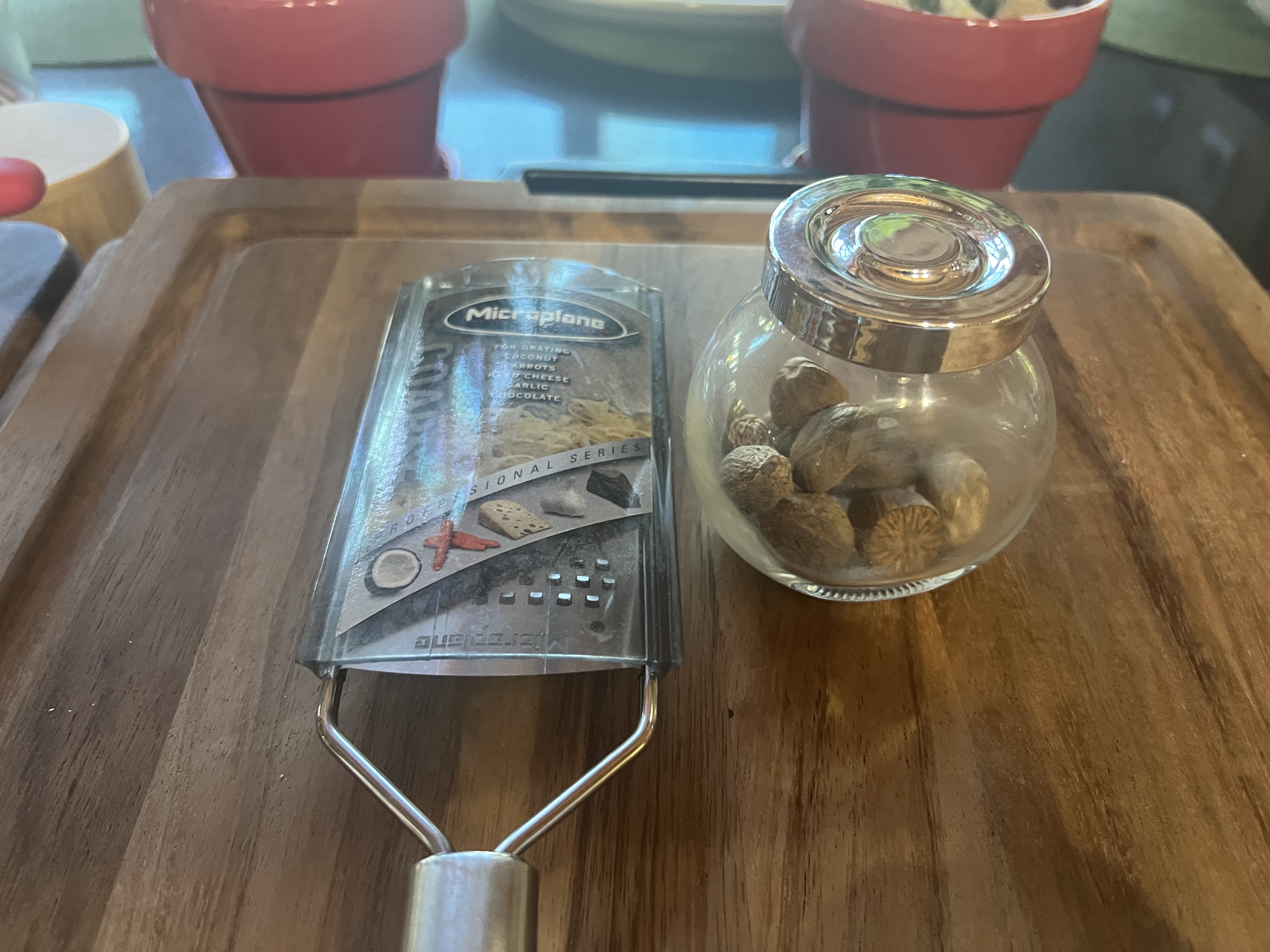
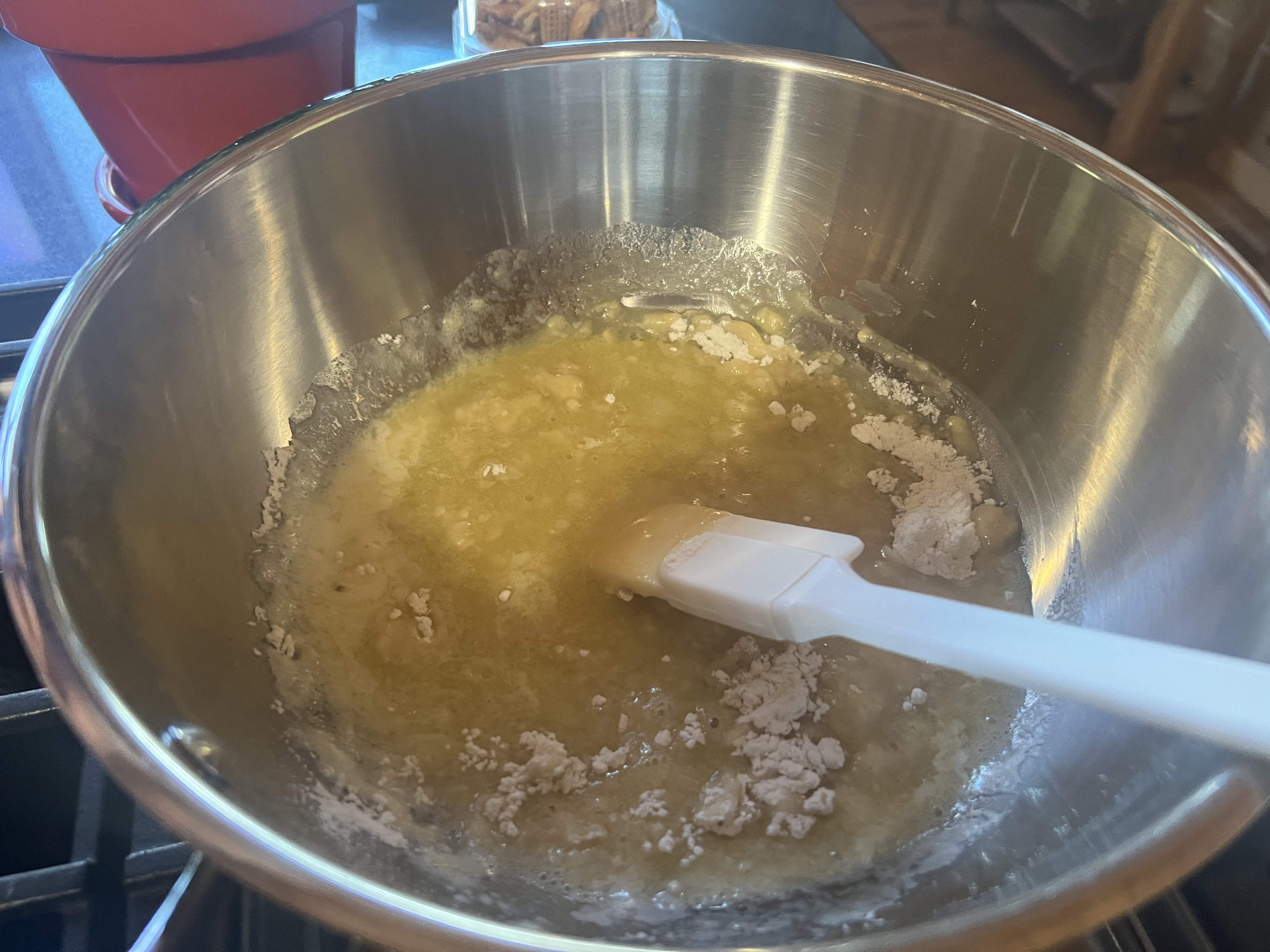
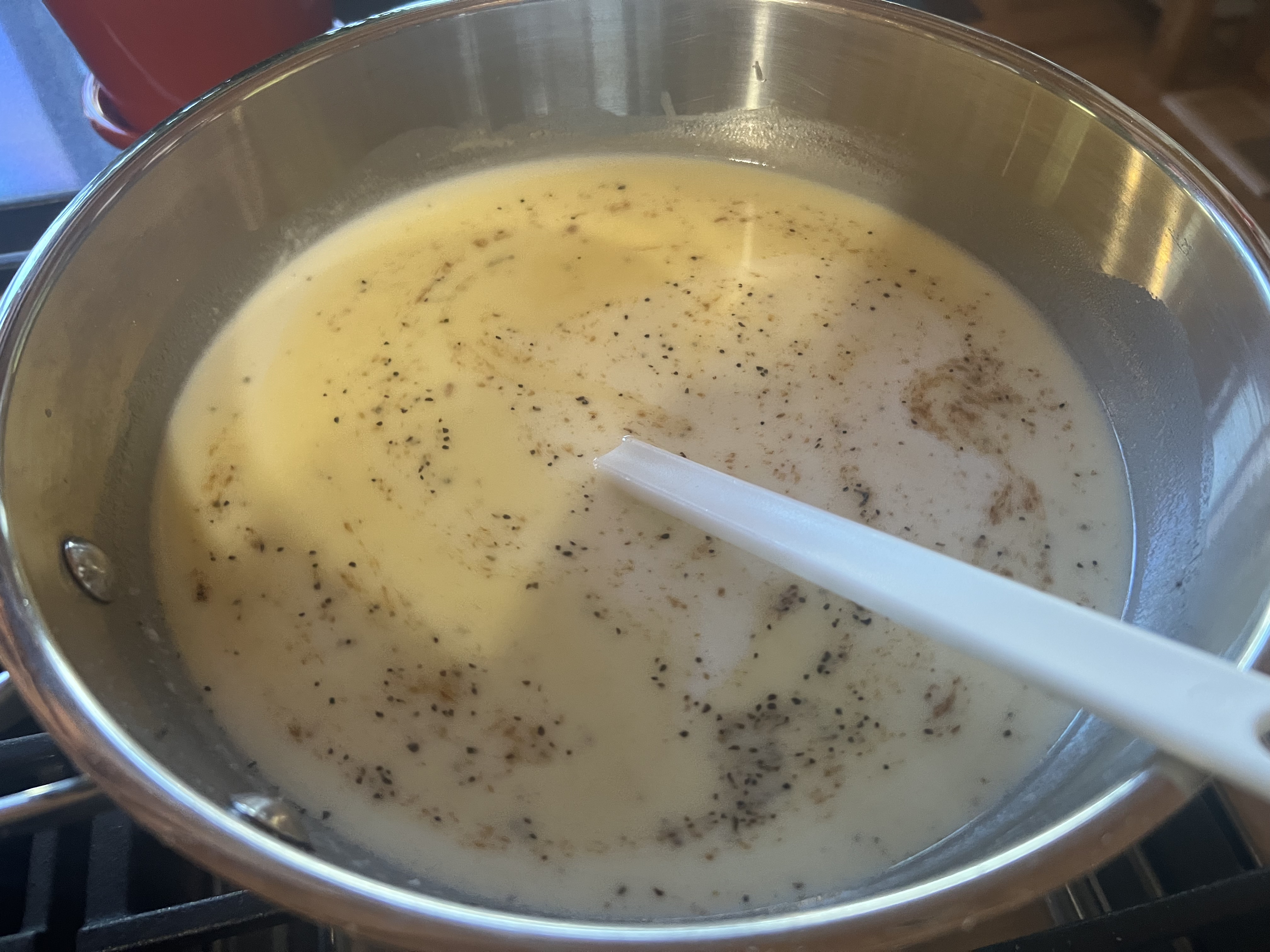
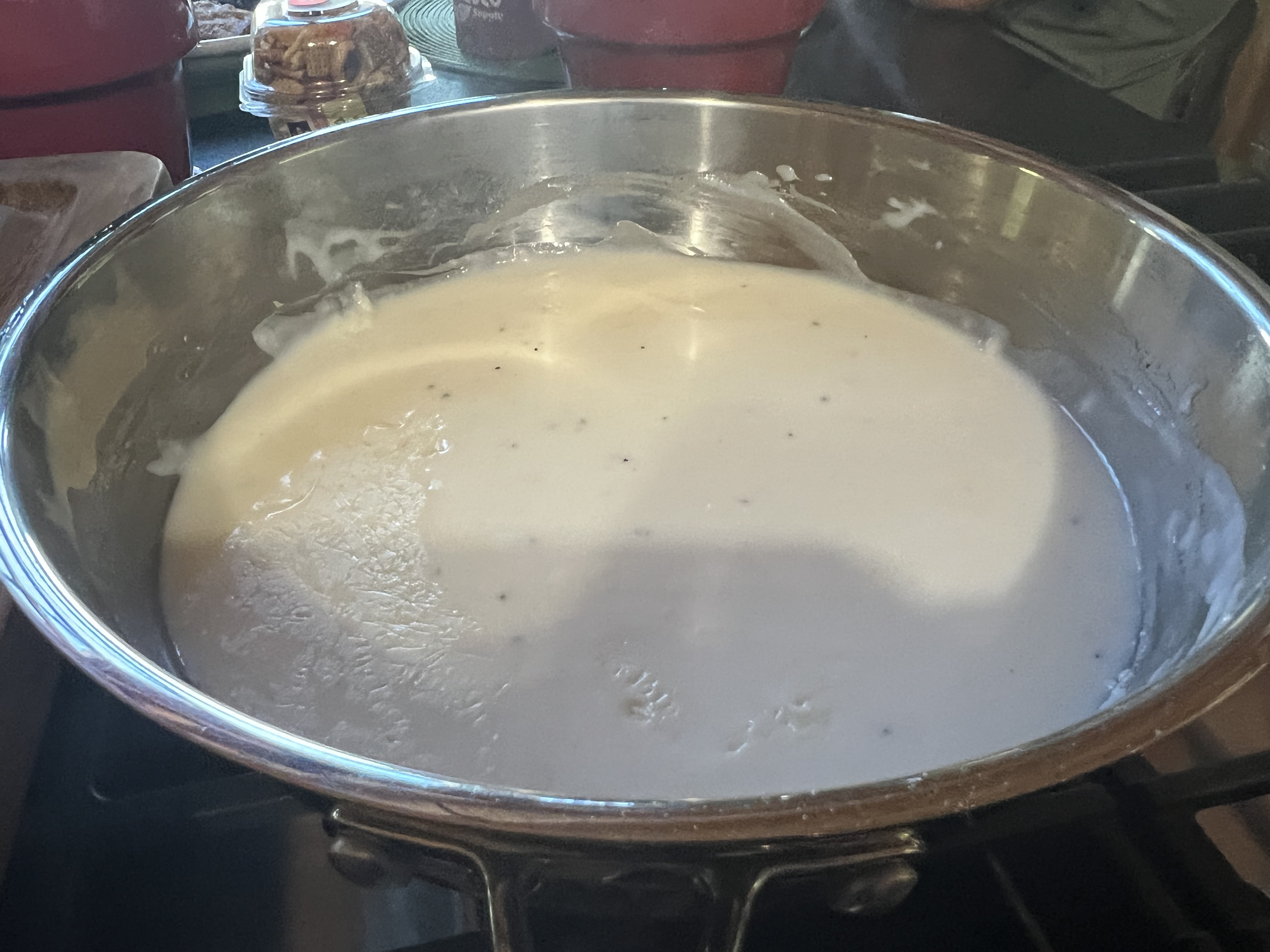
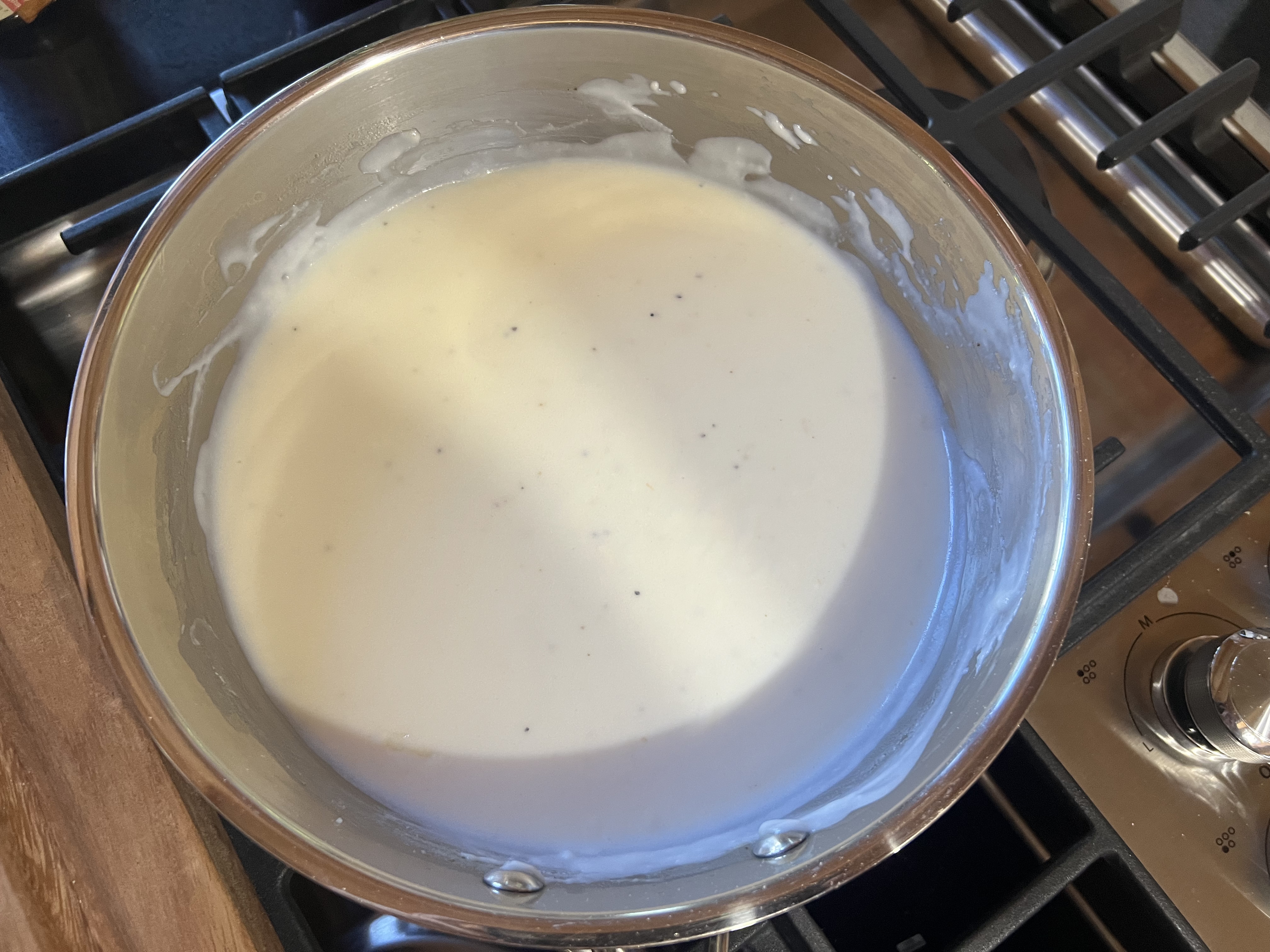
The first step is to start with the béchamel sauce. In a 3-quart sauce pot, melt the butter over medium-low heat. Once the butter has melted, add the flour. Using a rubber spatula, continue stirring for a few minutes until the raw flour has cooked out and dissolved into the butter, forming a paste-like consistency. Next, switch to a whisk, and slowly add the milk bit by bit. This will ensure the sauce remains smooth while whisking all the while to avoid lumps. Raise the heat to medium to bring it to a boil. Once it’s thickened enough to coat the back of a wooden spoon, turn off the heat and season well with kosher salt, fresh ground black pepper, and a generous amount of freshly grated nutmeg. This process can take anywhere from 15 to 25 minutes. Set aside to cool down.
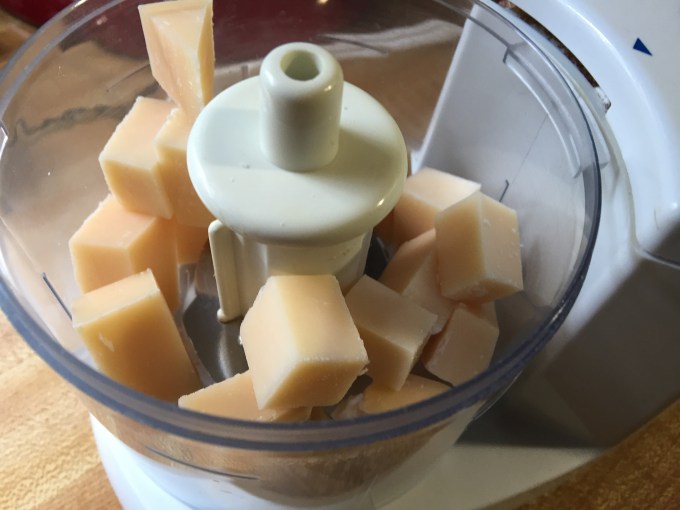
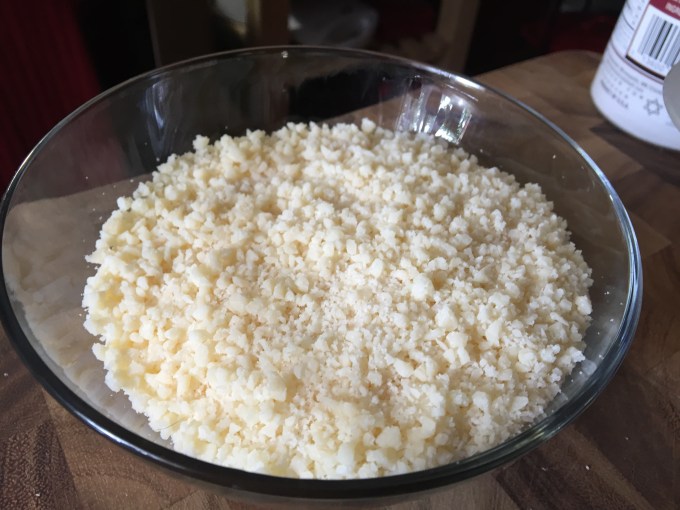
In a food processor, process the Parmigiano-Reggiano cheese and transfer it to a small bowl, setting it aside.
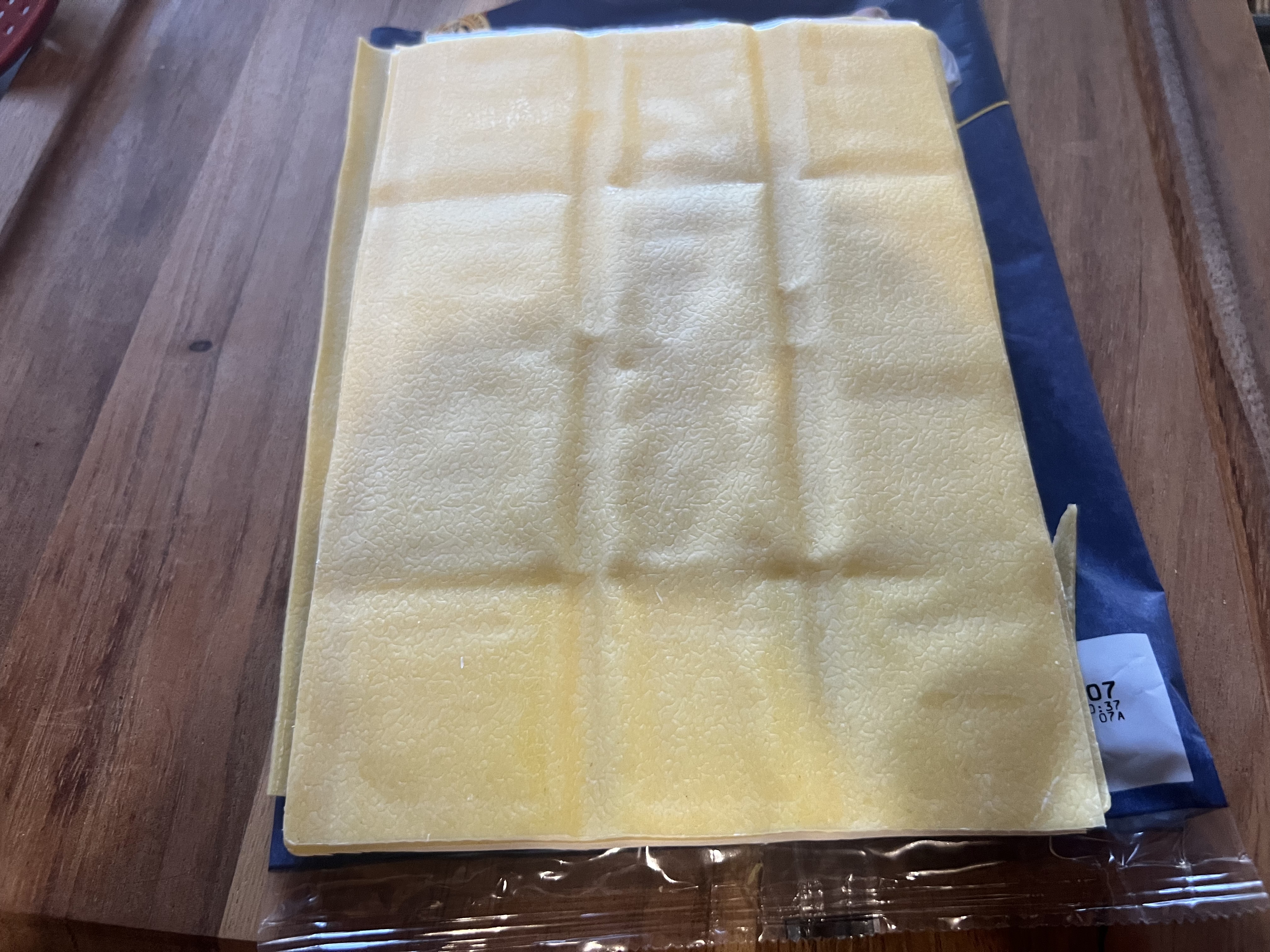
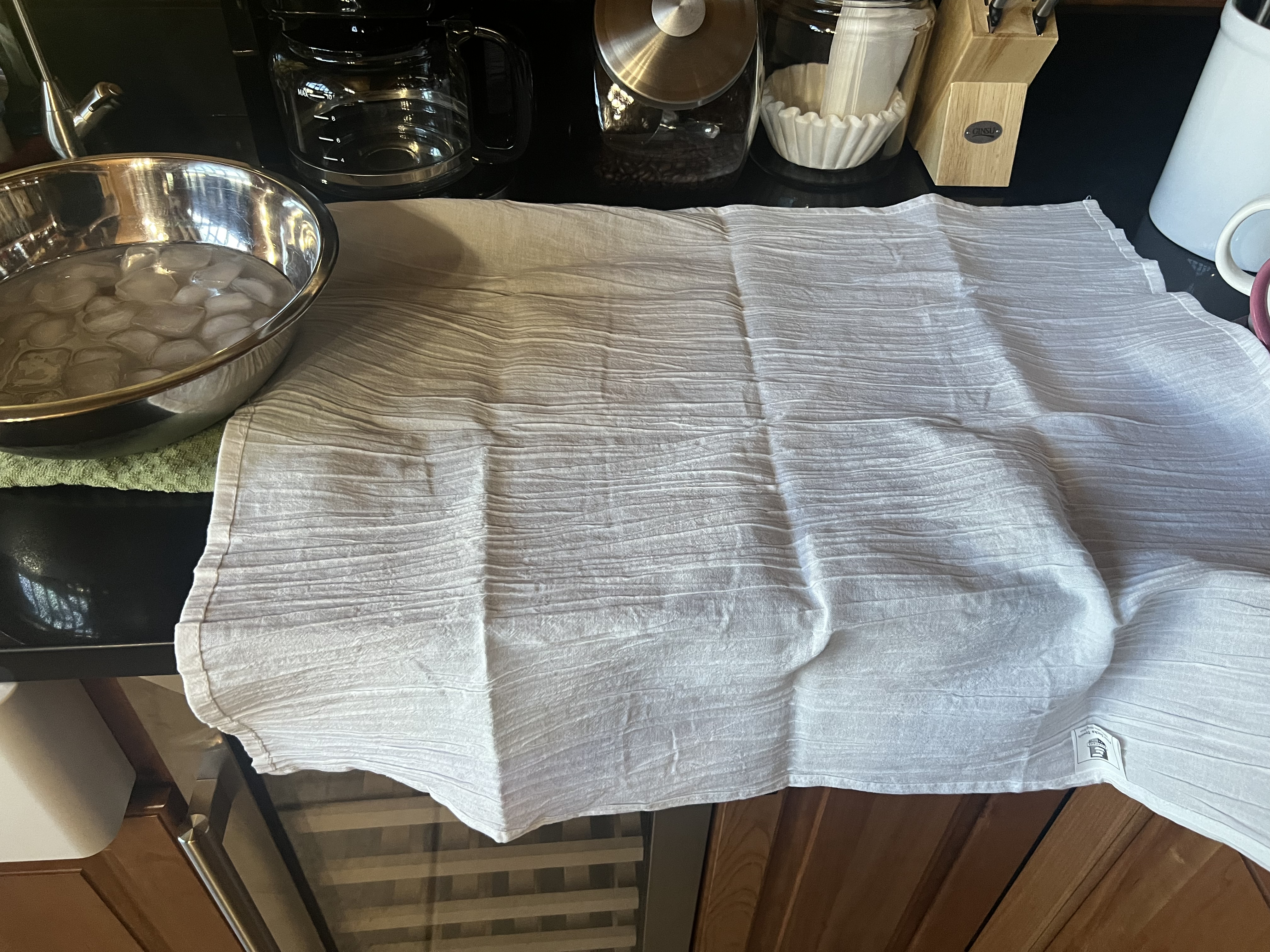
The second step is to prepare the pasta sheets. First, prepare a salted ice bath. In a large mixing bowl, whisk the salt until dissolved completely in the bowl of water before adding the ice. Set out the flour sack tea towels to dry the pasta sheets after being blanched and cooled down from the salted ice bath.
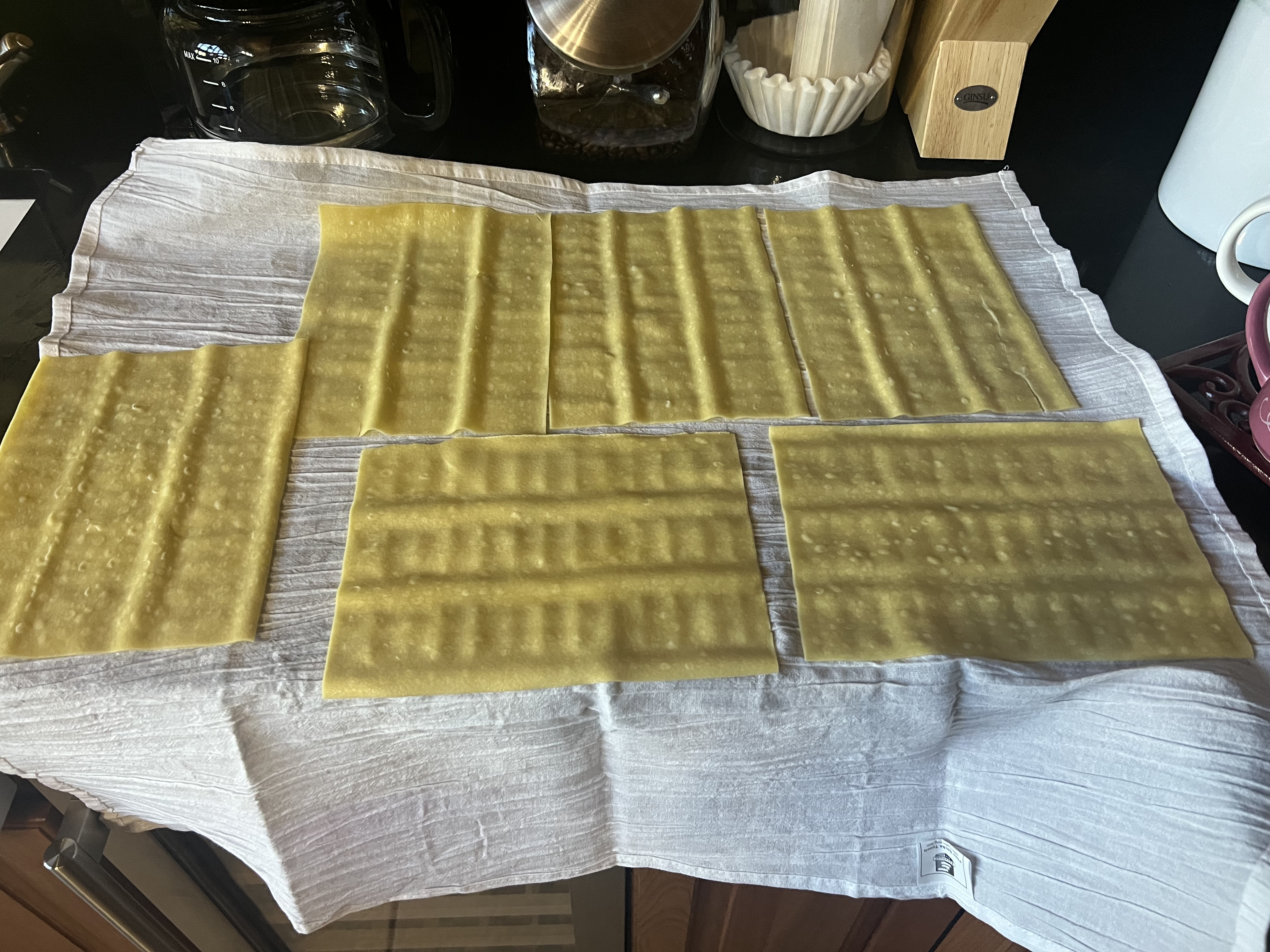
In a 6-quart pot filled with salted boiling water. *Blanch each pasta sheet until it floats to the surface of the water. This should take about 30 to 45 seconds. Immediately transfer the pasta sheet to a salted ice bath. Carefully remove the pasta sheet and place it onto the dry flour sack towel. Repeat the process until all 5 sheets are *blanched and cooled. Allow the pasta sheet to dry, and don’t worry if it tears; they will be rolled up anyway, and no one will see it.
Preheat the oven to 400 degrees F.
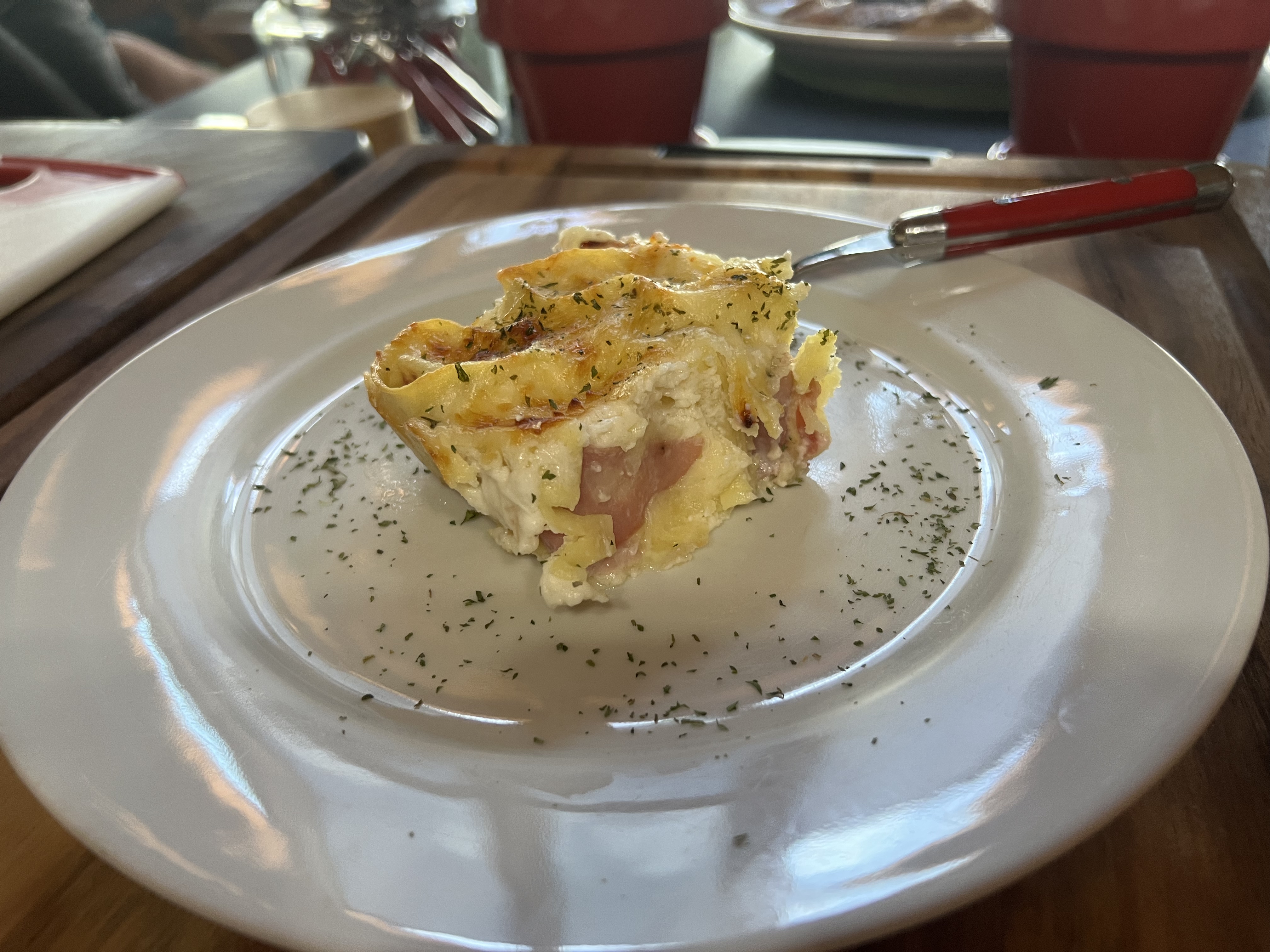
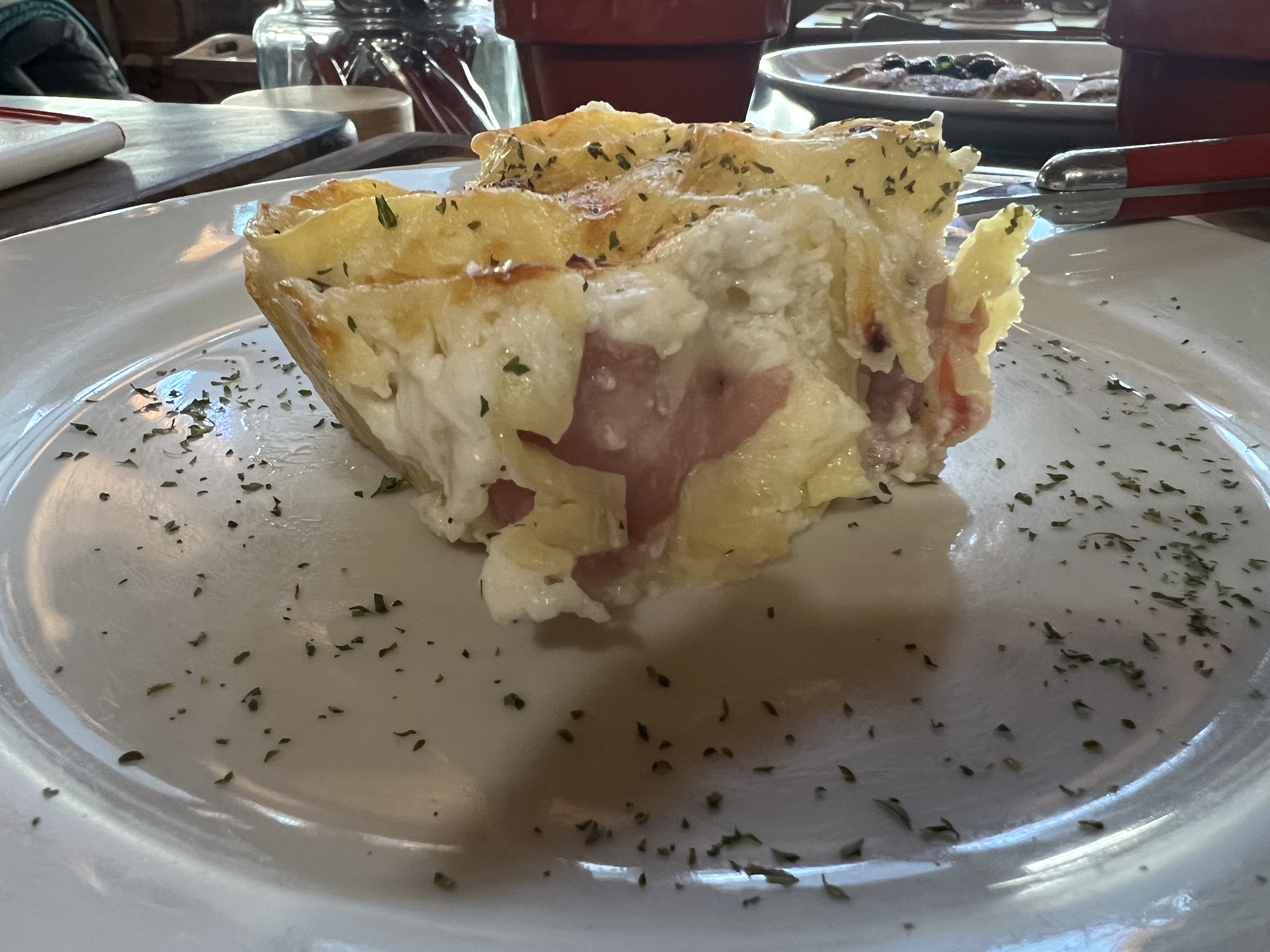
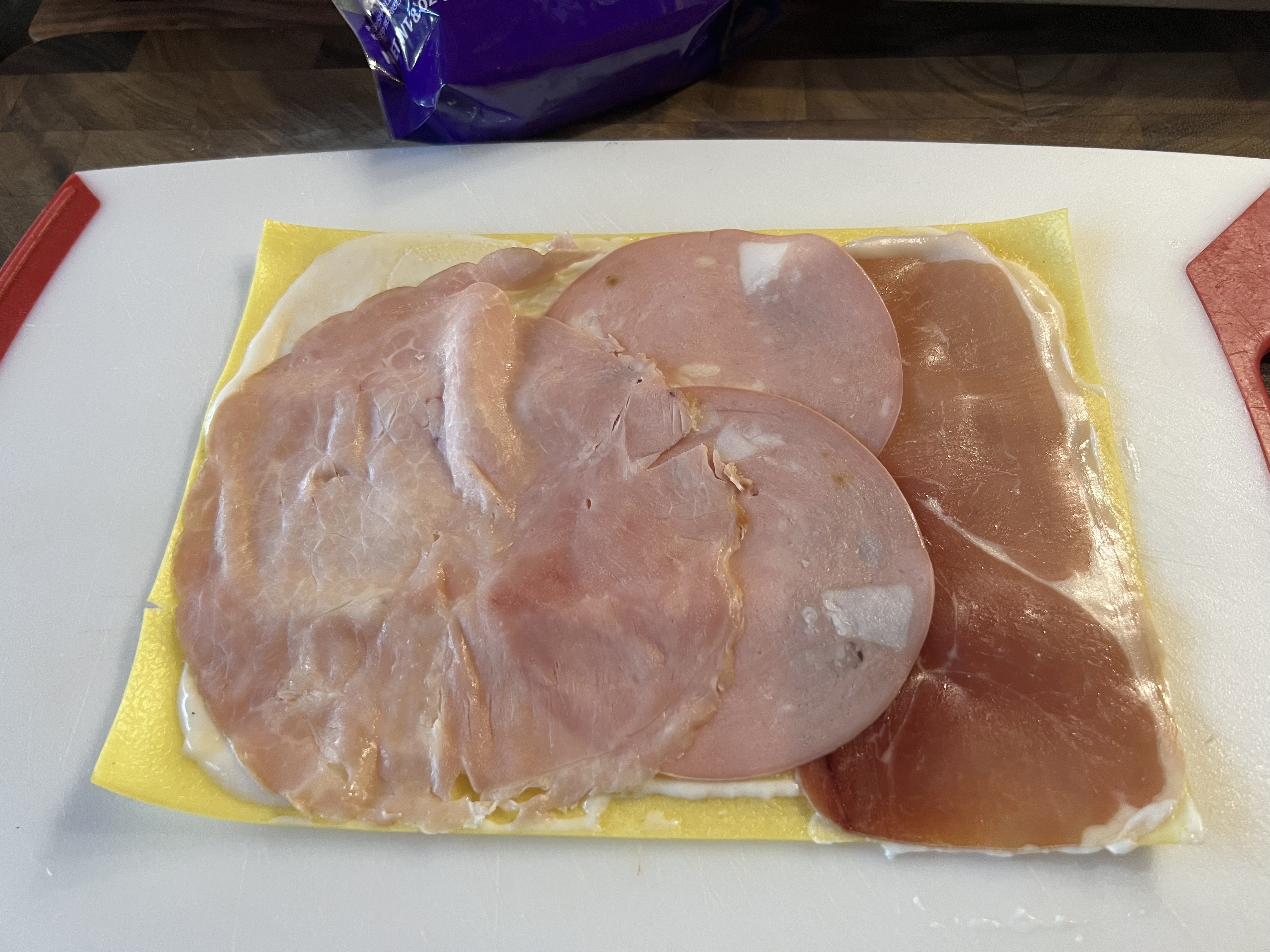
Next, place one of the pasta sheets onto a flat surface and begin with a light layer of the béchamel sauce. Use an offset spatula to spread out the sauce nearly to the edge of the pasta sheet. Next, place down alternating meats as seen above—two slices of the Mortadella, one ham, and one prosciutto. Moving forward, add 1/4 cup of the shredded Mozzarella, then the Fontina slices, two slices of the Provolone, and finally a light sprinkling of Parmigiano-Reggiano.
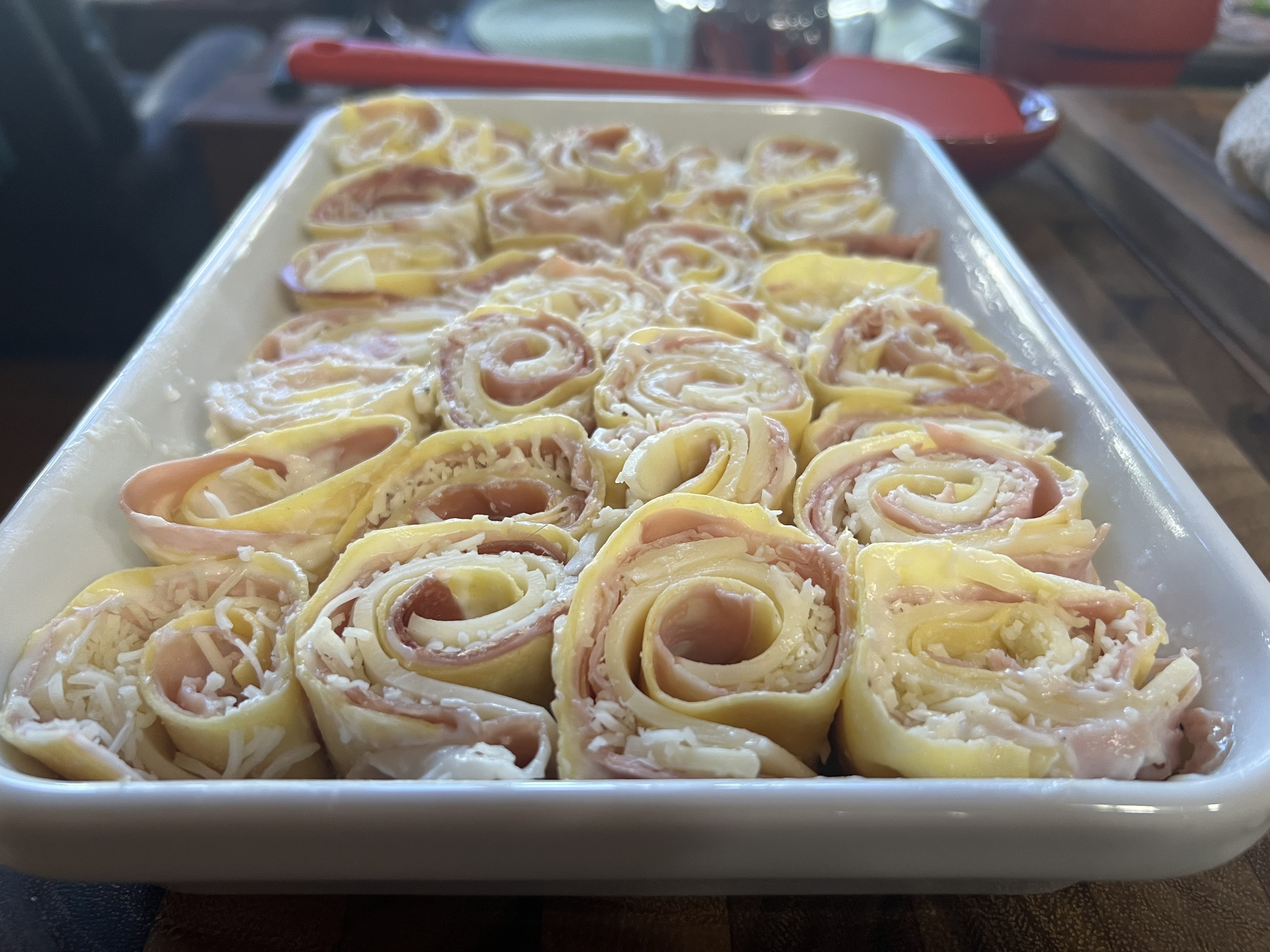
Starting with the longer side of the pasta sheet, roll each sheet up into a log. Cut the log into 6 equal slices, giving you 30 pasta “roses” when you’re done with all 5 of the filled pasta sheets.
Spread a light layer of the béchamel sauce into the bottom of an 8 x 10 baking dish. Place the pasta “roses” cut side up into the baking dish.
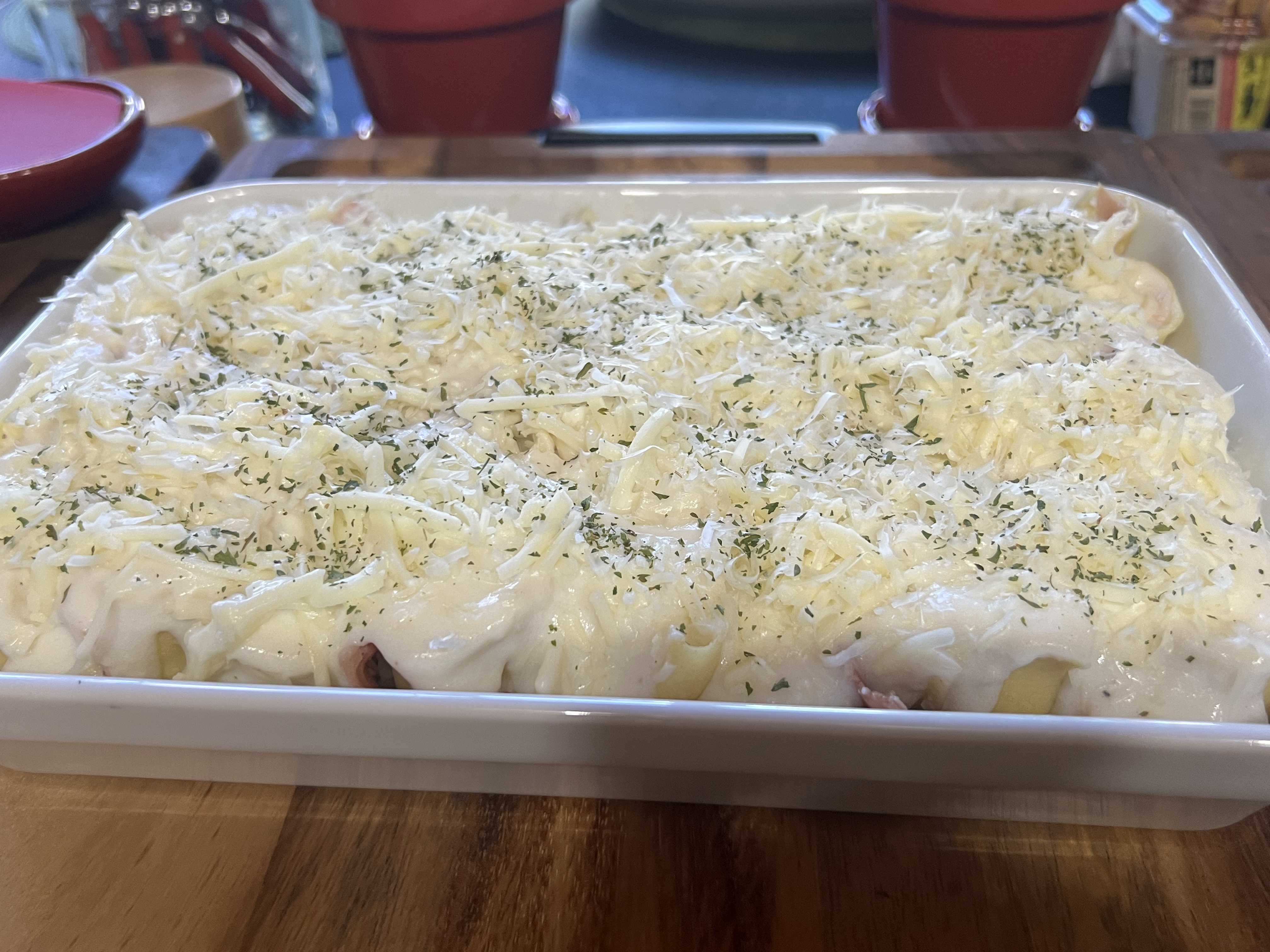
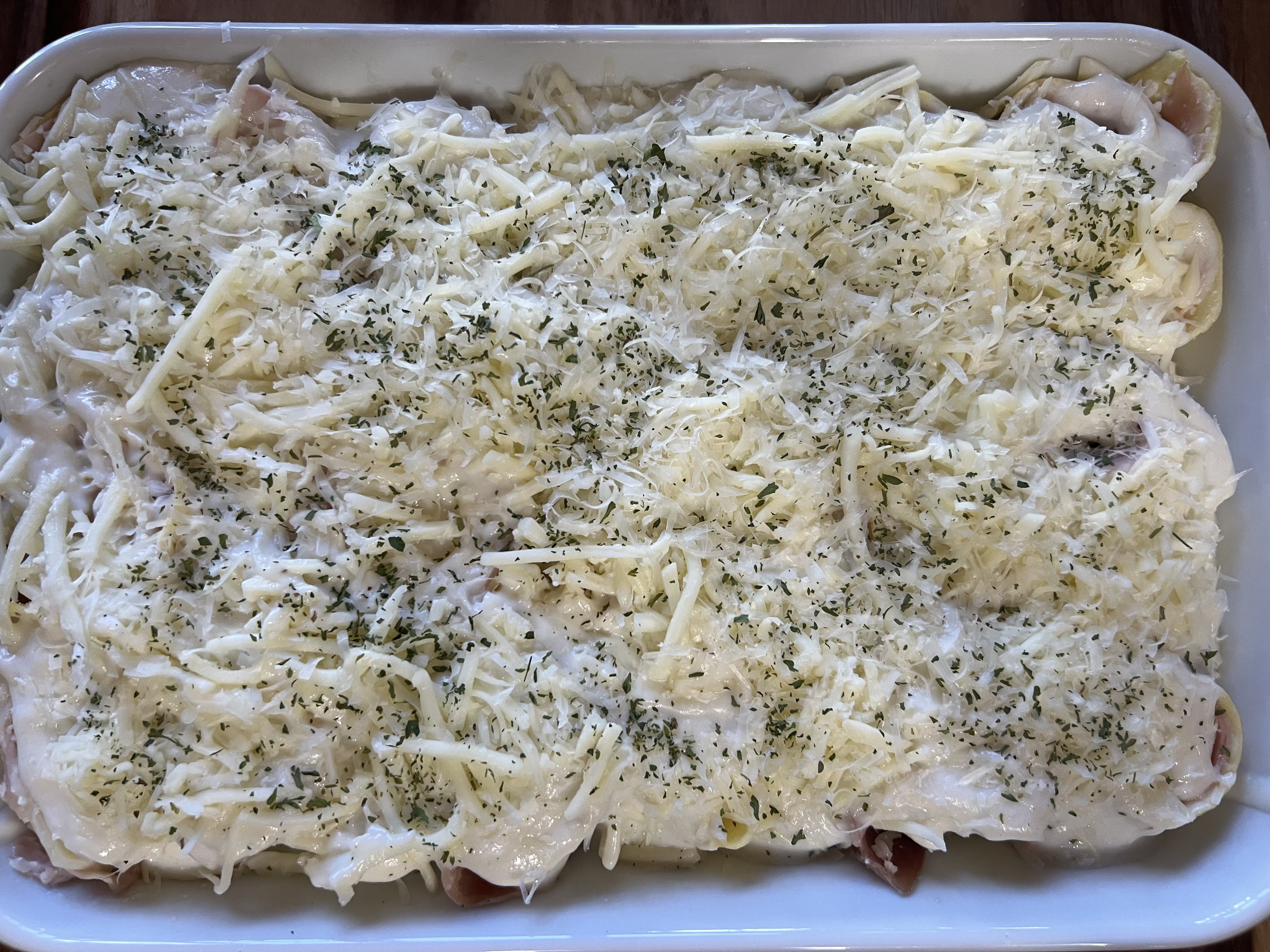
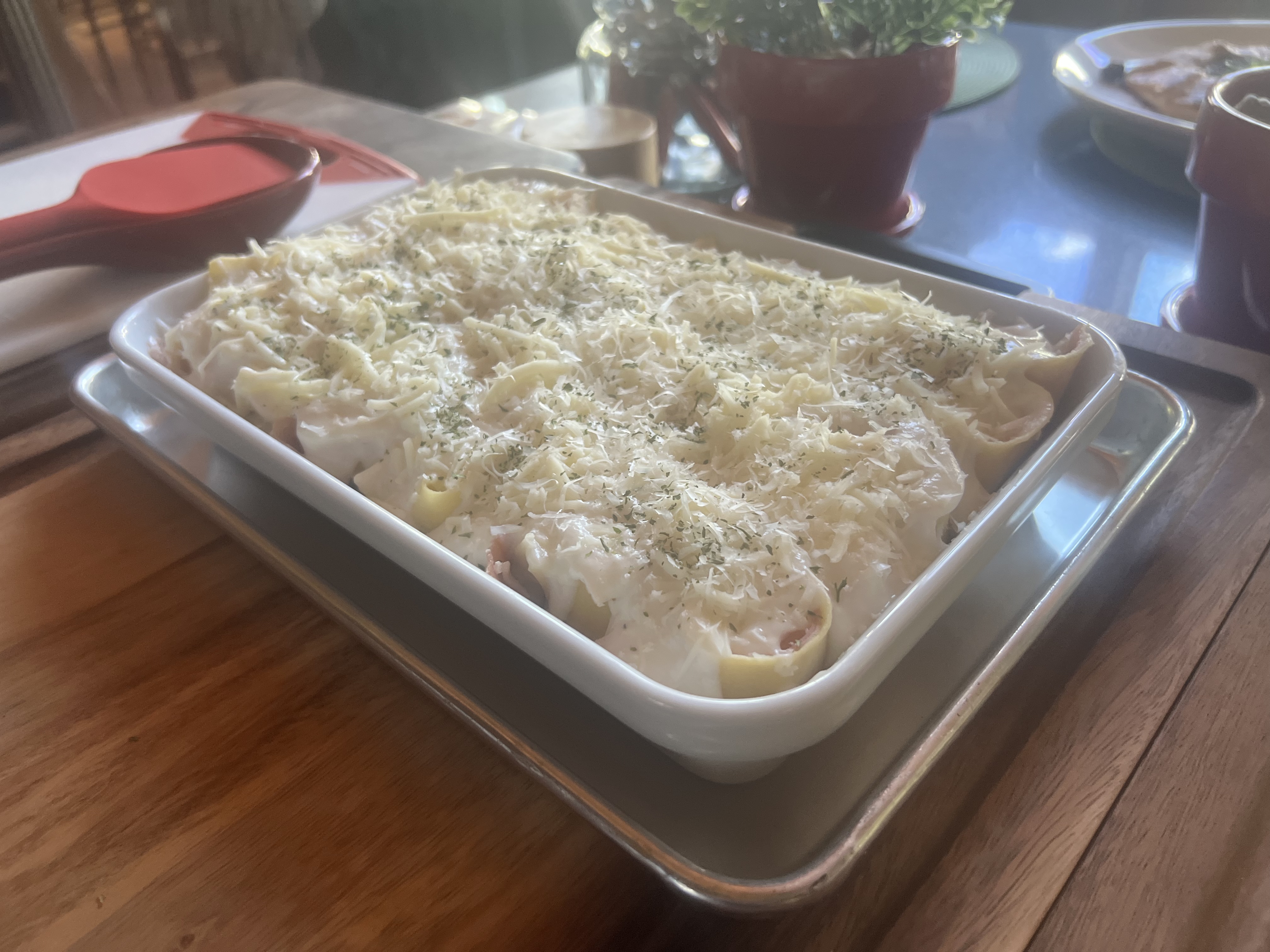
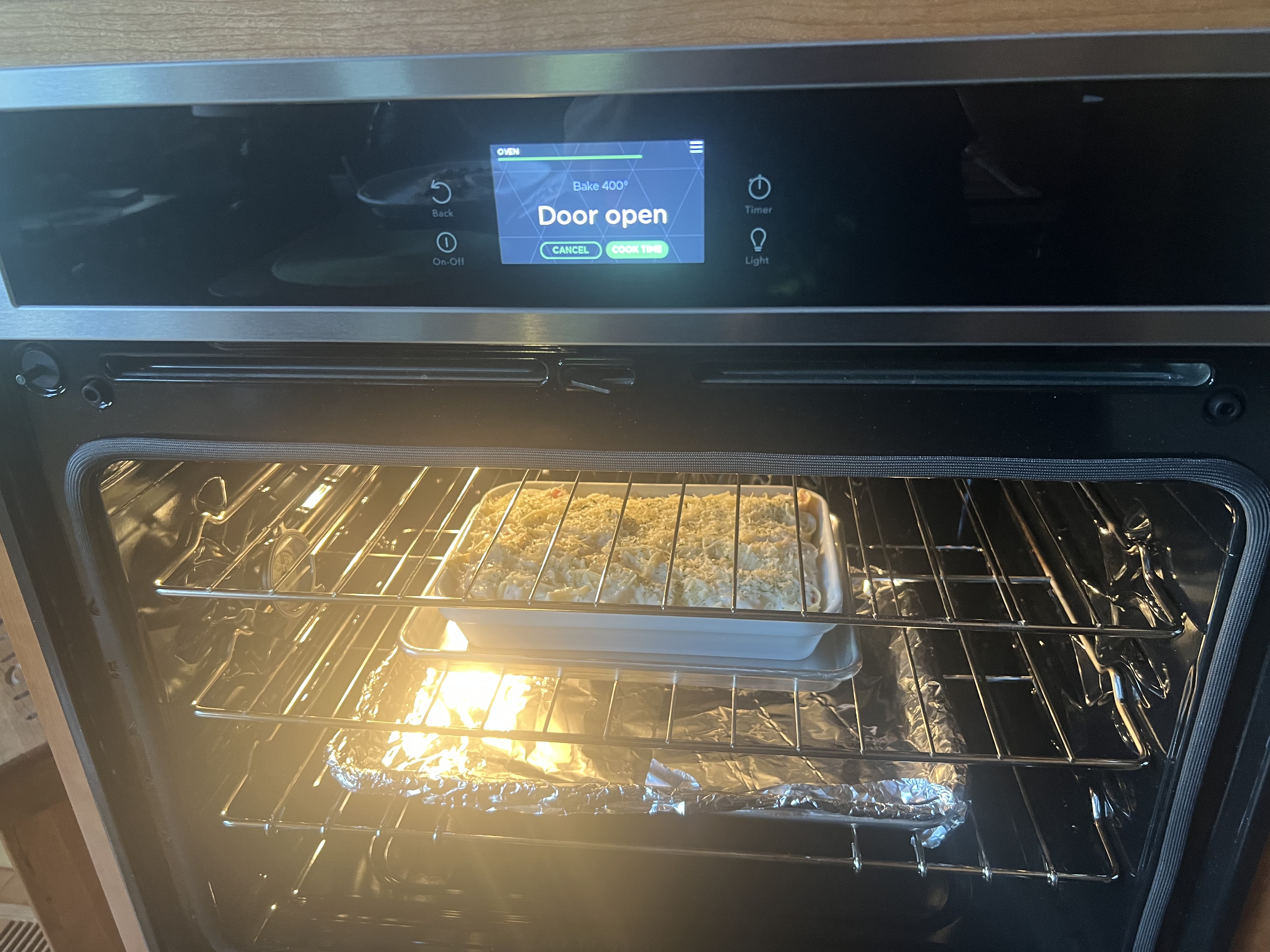
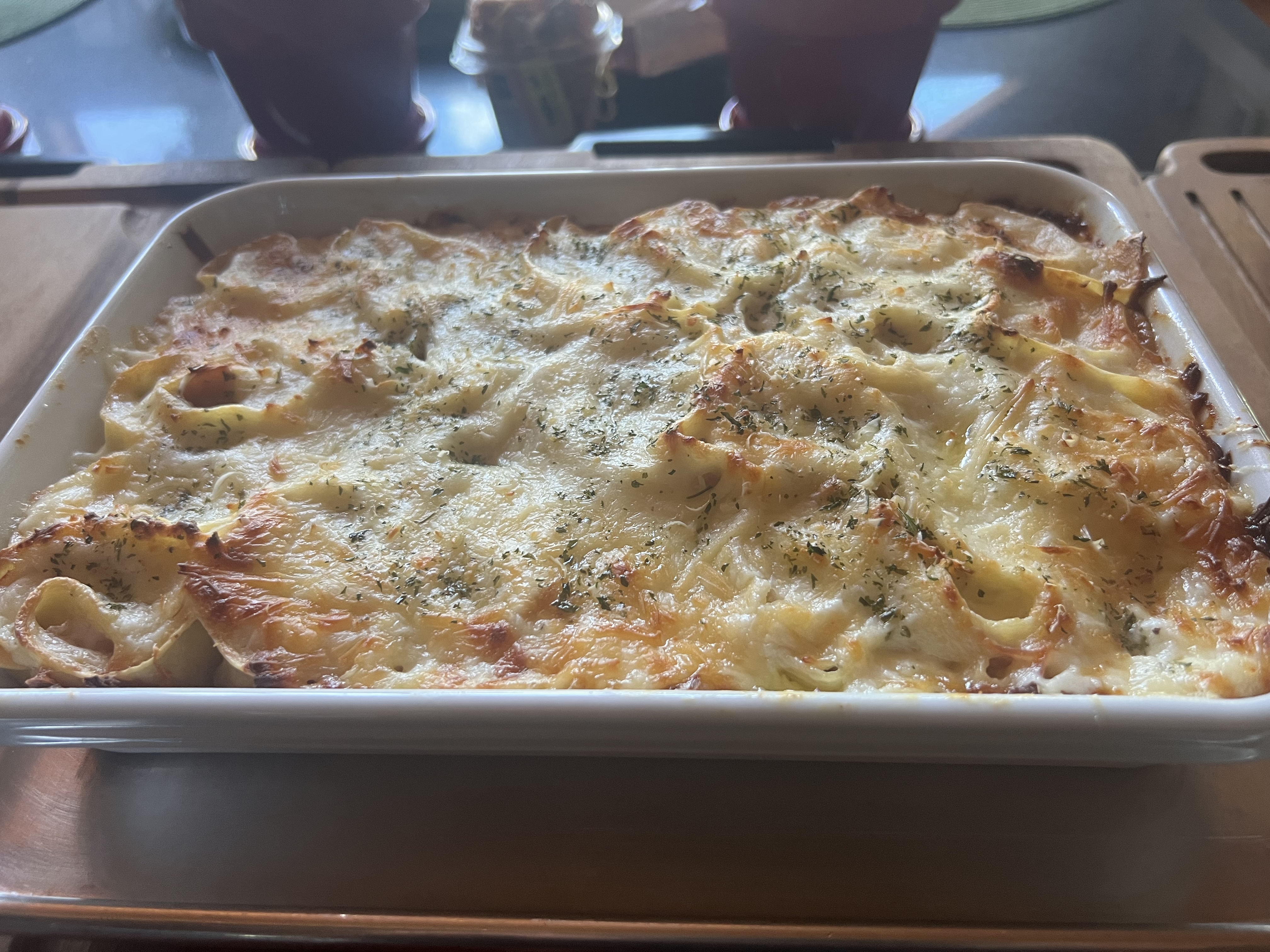
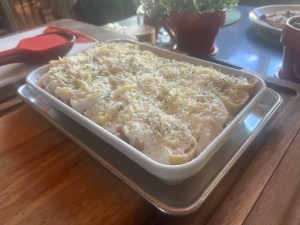
Top evenly with the rest of the béchamel sauce. Sprinkle the remaining shredded Mozzarella, Parmigiano Reggiano cheese, and minced parsley over the top. Place a sheet pan under the baking dish in case of bubbling over. Bake until bubbly and golden, about 30 to 40 minutes. The times may vary slightly depending on your oven. Allow the dish to rest for at least 20 minutes before serving.
There you have it, my Rossette Al Forno.
Notes:
1) When speaking about traditional Rosette Modenesi, the ingredients are generally as follows:
a) Fresh pasta
b) béchamel
c) prosciutto cotto (unsmoked, thinly sliced cooked ham), traditionally Prosciutto Cotto di Vignola
d) cheese (Fontina, Emmenthal, Edam, Asiago, Galbanino, provolone, or Edamer)
Parmigiano Reggiano or Grana Padano cheese
2) If you can’t find Fontina cheese pre-sliced at your local grocery store, you’ll be able to see it in the specialty cheese section. Fontina does not come pre-sliced, so you’ll want to slice it as thin as possible for this recipe. The slices of Fontina will be smaller, so you’ll want to get 10 thin slices from the 8-ounce package.
3) For this dish, I’m using non-smoked Provolone, Fontina, freshly ground Parmigiano-Reggiano, and pre-shredded Mozzarella. As with any dish, the better the quality of the ingredients, the better the results.
4)Today, I’m using fresh, pre-made lasagna sheets to save time and effort.
5) You can make your pasta from scratch, which would be delicious. Adjust the “prep time” if making your pasta. Also, if you roll out your pasta thinner, it would require more filling. Having extra on hand keeps things more flexible.
6) For Homemade pasta:
300 grams (10.5 oz) “00” flour or unbleached all-purpose flour (every 100 grams = 1 scant cup)
3 large eggs
7) You can make the béchamel sauce a day or two in advance and store it in the fridge.
8) *Blanching is a cooking process where vegetables or pasta are briefly immersed in boiling water, followed by an immediate transfer to cold water to stop the cooking process.
9) Make sure you salted the ice bath. The reason for this is that if you put the pasta sheets in a plain ice bath, the salt will wash off from the *blanching process. You want your pasta to be seasoned well.
10) Linda Lou Hamel is not a nutritionist or dietitian, and any nutritional information shared is an estimate. If calorie count and nutritional value are important to you, I recommend running the ingredients through the online nutritional calculator of your choice. Calories and values can vary depending on the brands you choose.
Rossette Al Forno (Pasta Roses With Ham Mortadella & Proscuitto
Equipment
- 1 baking dish 8x 10
- 1 chef's knife
- 1 cutting board
- 1 sauce pot 3-quart
- 1 stock pot 6-quart
- 1 whisk
- 1 silicone spatula
- 1 pair of tongs Long pair
- 1 mixing bowl Large
- 1 flour-sack towel Substitute tea towels
- 1 sheet pan 1/4-size
- 1 offset spatula
- 1 food processor 10-cup
- 1 slotted pasta spoon Large
Ingredients
For The Pasta:
- 5 sheets Rana lasagne fresh pasta Substitute homemade pasta, see notes
- 1/4 cup Kosher salt Divided, 1/8 cup for the pasta cooking water and 1/8 cup for the ice bath
For The Filling:
- 10 slices Mortadella Thinly sliced
- 5 slices Prosciutto, Thinly sliced
- 5 slices cooked ham Thinly sliced
- 10 slices Provolone Non-smoked and thinly sliced
- 8-ounce package Fontina cheese See notes
- 3/4 cup Parmigiano Reggiano cheese Freshly grated, reserve 1/4 cup for the top
- 8-ounce package Mozzarella cheese Shredded
For The Béchamel:
- 3 ounces (6 tablespoons) butter Unsalted
- 3 ounces (6 tablespoons) flour "00" or unbleached all-purpose
- 1 quart whole milk Room temperature
- 1/4 tsp nutmeg Freshly grated
- 1 tsp Kosher salt
- 1/2 tsp black pepper Freshly ground, substitute fresh ground white pepper
For The Garnish:
- 2 tbsps Italian flat-leaf parsley Finely mined
Instructions
- The first step is to start with the béchamel sauce. In a 3-quart sauce pot, melt the butter over medium-low heat. Once the butter has melted, add the flour. Using a rubber spatula, continue stirring for a few minutes until the raw flour has cooked out and dissolved into the butter, forming a paste-like consistency. Next, switch to a whisk, and slowly add the milk bit by bit. This will ensure the sauce remains smooth while whisking all the while to avoid lumps. Raise the heat to medium to bring it to a boil. Once it's thickened enough to coat the back of a wooden spoon, turn off the heat and season well with kosher salt, fresh ground black pepper, and a generous amount of freshly grated nutmeg. This process can take anywhere from 15 to 25 minutes. Set aside to cool down.In a food processor, process the Parmigiano-Reggiano cheese and transfer it to a small bowl, setting it aside.The second step is to prepare the pasta sheets. First, prepare a salted ice bath. In a large mixing bowl, whisk the salt until dissolved completely in the bowl of water before adding the ice. Set out the flour sack tea towels to dry the pasta sheets after being *blanched and cooled from the salted ice bath.In a 6-quart pot filled with salted boiling water. *Blanch each pasta sheet until it floats to the surface of the water. This should take about 30 to 45 seconds. Immediately transfer the pasta sheet to the salted ice bath. Carefully remove the pasta sheet and place it onto the dry flour sack towel. Repeat the process until all 5 sheets are *blanched and cooled. Allow the pasta sheet to dry, and don't worry if it tears; they will be rolled up anyway, and no one will see it.Preheat the oven to 400 degrees F.Next, place one of the pasta sheets onto a flat surface and begin with a light layer of the béchamel sauce. Use an offset spatula to spread out the sauce nearly to the edge of the pasta sheet. Next, place down alternating meats as seen above—two slices of the Mortadella, one ham, and one prosciutto. Moving forward, add 1/4 cup of the shredded Mozzarella, then the Fontina slices, two slices of the Provolone, and finally a light sprinkling of Parmigiano-Reggiano.Starting with the longer side of the pasta sheet, roll each sheet up into a log. Cut the log into 6 equal slices, giving you 30 pasta "roses" when you're done with all 5 of the filled pasta sheets.Spread a light layer of the béchamel sauce into the bottom of an 8 x 10 baking dish. Place the pasta "roses" cut side up into the baking dish.Top evenly with the rest of the béchamel sauce. Sprinkle the remaining shredded Mozzarella, Parmigiano Reggiano cheese, and minced parsley over the top. Place a sheet pan under the baking dish in case of bubbling over. Bake until bubbly and golden, about 30 to 40 minutes. The times may vary slightly depending on your oven. Allow the dish to rest for at least 20 minutes before serving.There you have it, my Rossette Al Forno.

Notes
 1) When speaking about traditional Rosette Modenesi, the ingredients are generally as follows:
a) Fresh pasta
b) béchamel
c) prosciutto cotto (unsmoked, thinly sliced cooked ham), traditionally Prosciutto Cotto di Vignola
d) cheese (Fontina, Emmenthal, Edam, Asiago, Galbanino, provolone, or Edamer)
Parmigiano Reggiano or Grana Padano cheese 2) If you can't find Fontina cheese pre-sliced at your local grocery store, you'll be able to see it in the specialty cheese section. Fontina does not come pre-sliced, so you'll want to slice it as thin as possible for this recipe. The slices of Fontina will be smaller, so you'll want to get 10 thin slices from the 8-ounce package. 3) For this dish, I'm using non-smoked Provolone, Fontina, freshly ground Parmigiano-Reggiano, and pre-shredded Mozzarella. As with any dish, the better the quality of the ingredients, the better the results. 4)Today, I'm using fresh, pre-made lasagne sheets to save time and effort. 5) You can make your pasta from scratch, which would be delicious. Adjust the "prep time" if making your pasta. Also, if you roll out your pasta thinner, it would require more filling. Having extra on hand keeps things more flexible. 6) For Homemade pasta:
300 grams (10.5 oz) "00" flour or unbleached all-purpose flour (every 100 grams = 1 scant cup)
3 large eggs 7) You can make the béchamel sauce a day or two in advance and store it in the fridge. 8) *Blanching is a cooking process where vegetables or pasta are briefly immersed in boiling water, followed by an immediate transfer to cold water to stop the cooking process. 9) Make sure you salted the ice bath. The reason for this is that if you put the pasta sheets in a plain ice bath, the salt will wash off from the *blanching process. You want your pasta to be seasoned well. 10) Linda Lou Hamel is not a nutritionist or dietitian, and any nutritional information shared is an estimate. If calorie count and nutritional value are important to you, I recommend running the ingredients through the online nutritional calculator of your choice. Calories and values can vary depending on the brands you choose.
https://lindalouhamel.com/2019/07/10/summer-time-flowers-and-herbs/
https://lindalouhamel.com/2025/01/13/homemade-pasta/