




Today was a really fun day! Tonya, a good friend of mine, went with me to shop for seafood. I think she was somewhat surprised to see me stick my hand right into the lobster tank.
This is one of those posts that may not be easy for everyone to read. Most shellfish should be alive before cooking. This makes it hard for a lot of people to handle. BEING HUMANE IS KEY!
I’ve worked for many years cooking and handling lobsters, blue crabs, shrimp, mussels, and clams. The fresher the seafood, the better the finished dish is going to be.
The Lobster Institute came up with a study. The study reads… lobsters, like insects, do not have complex brains that allow them to process pain like humans and other animals do. They have compared it to when you kill a mosquito. Cooking a lobster, in the practical sense, is like killing a large bug.
To put a live lobster to sleep, first, cross the arms of the lobster, then set it down, on its head, tail up, on the counter. Rub the back of the thorax in an up-and-down motion with your fingers. Do this for about 45 seconds. Let go, and the lobster will balance on its head and not move. This is when you know the lobster’s asleep.
How To Cook And Open A Lobster.










How’s this for a finished dish, My Seafood Scampi Over Linguine? Great to take to parties. For this recipe, click.


Prep Time: 5 to 7 minutes (Allow time to put the lobster to sleep as explained below, and 5-7 minutes to bring water to a hard boil.)
Cook Time: 8 to 10 minutes per pound (Cooked lobster should be vibrant red)
Total Time: approx. 17 minutes
Yields: 1 serving
Equipment: 1 large stockpot with a tight-fitting lid (8-16-quart), meat mallet, 1 lobster cracker, 1 lobster pick, meat-safe cutting board, dish towel
Ingredients:
1 (2-pound) lobster, live
1 1/2 quarts of water
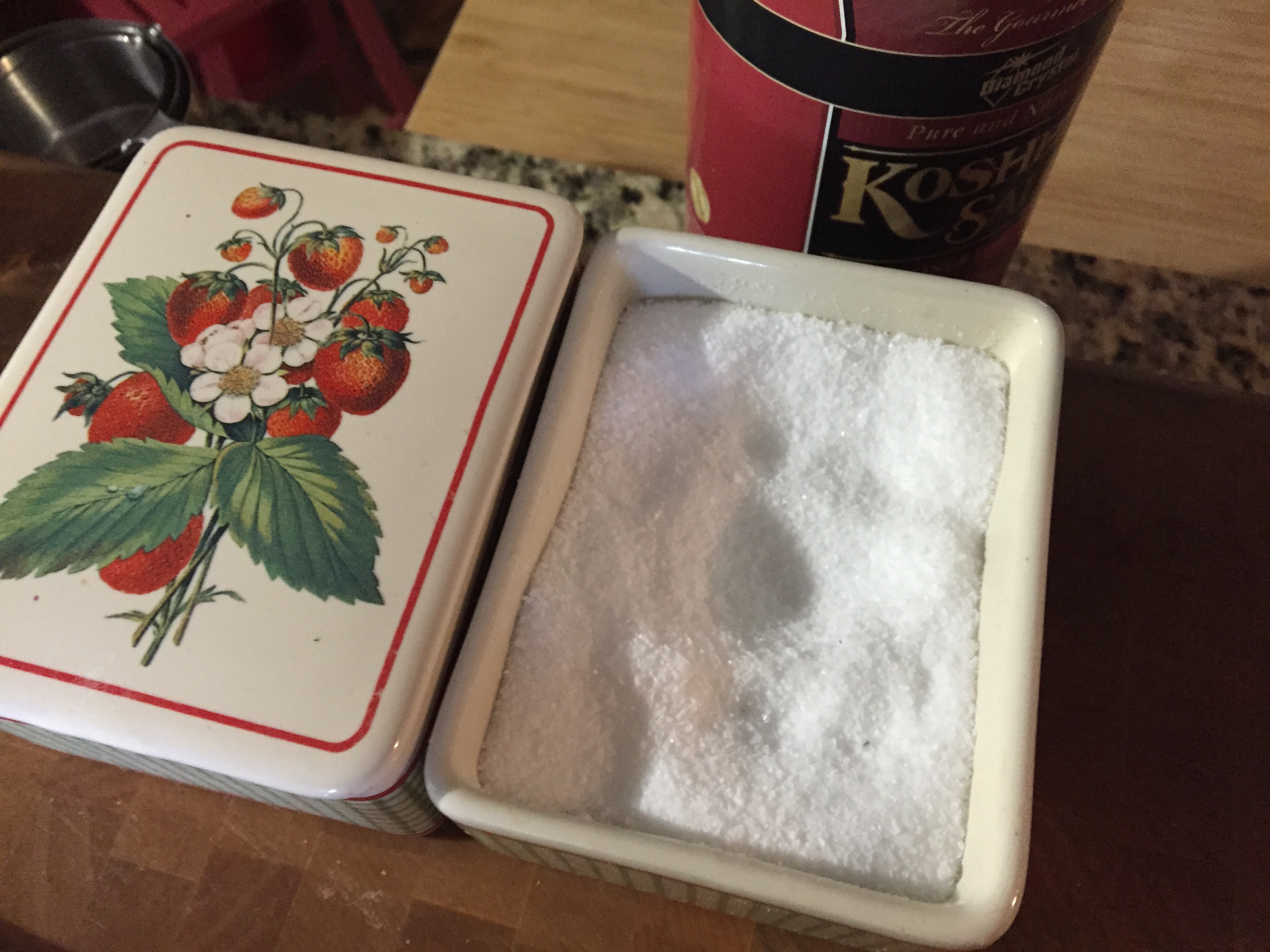
2 tablespoons of kosher salt
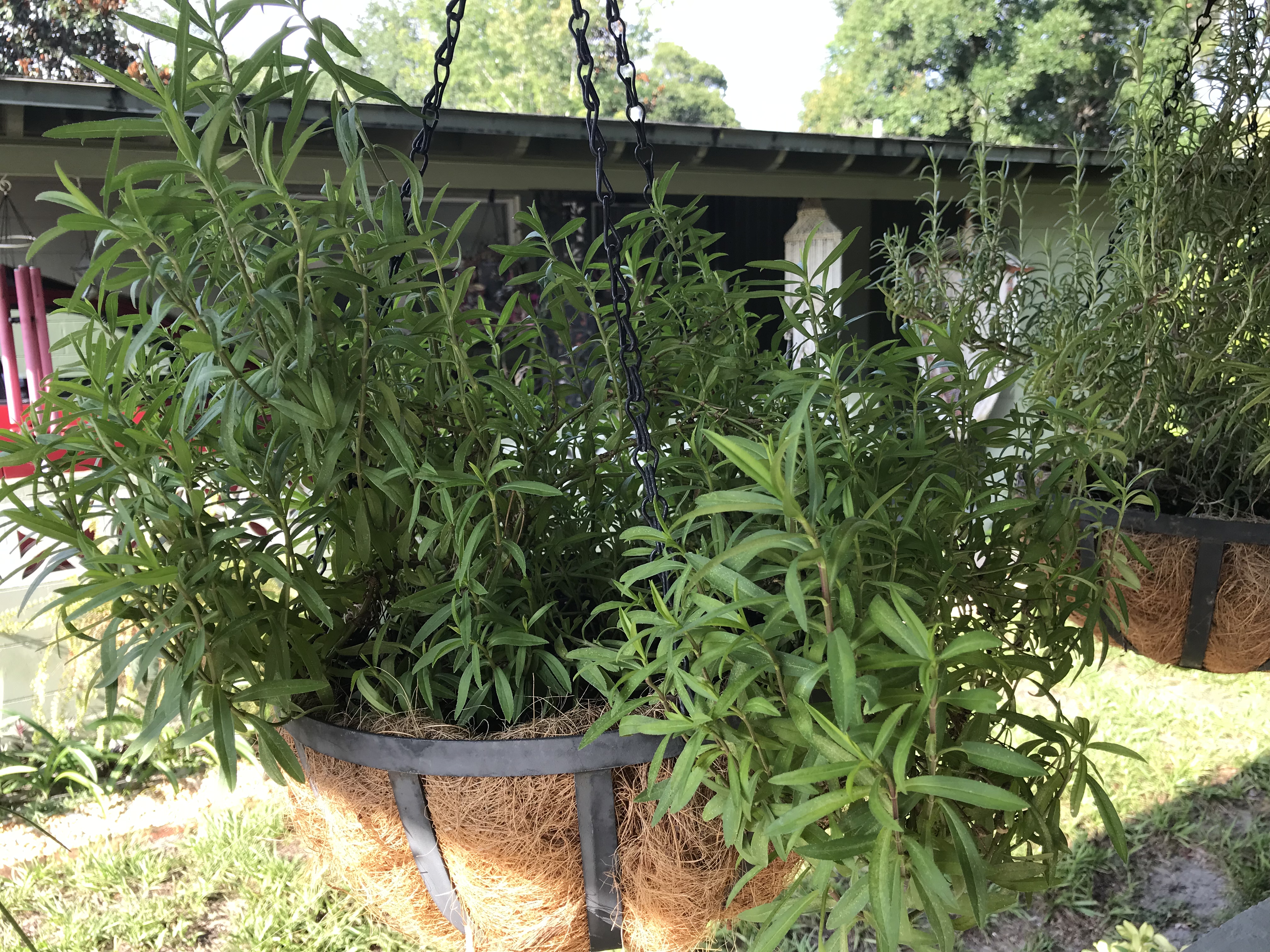
4 sprigs of fresh tarragon
Instructions:
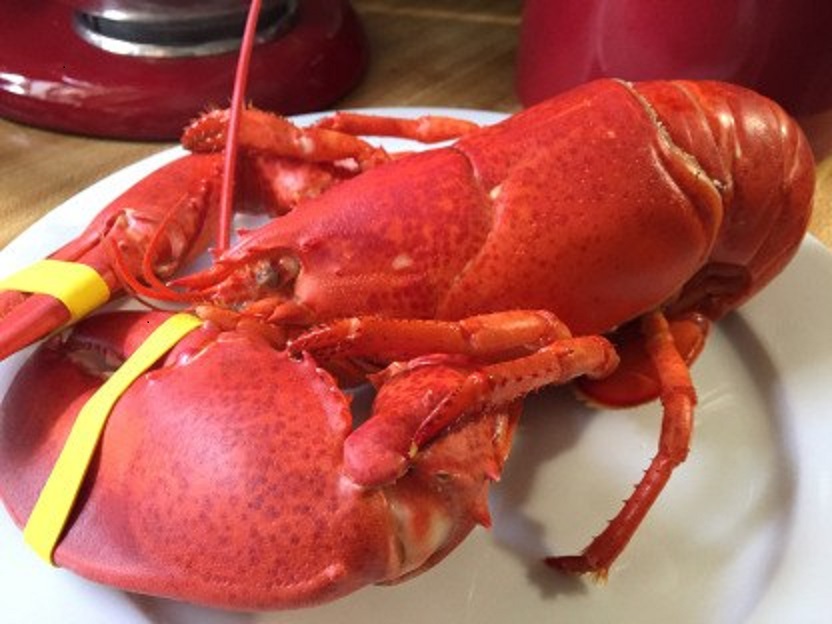
Let’s get back to cooking and opening a lobster. Once I bring the lobster(s) home, I make sure they are kept in the bag with some crushed ice. You want to cook them as soon as possible. Before placing them into the pot of salted boiling water, I put them to sleep. This is something I learned working at a seafood restaurant.
Place the lobster face (head) down on a counter, tail end in the air. Cross their arms and claws, then rub the backside (the thorax) of their shell, in an up and down motion. In about 45 seconds, their legs and antennae will stop moving. The lobster will then be asleep. Balancing on their heads, by themselves on the counter. If you want to see how this is done, just Google “How to put a lobster to sleep, and there are videos available.
In a large stockpot of boiling salted water, add the sprigs of fresh tarragon. Next, I place the sleeping lobster, headfirst, immediately into the pot. You’ll notice that the lobster is not completely submerged. I prefer to let the steam, along with the water, cook the lobster. Place a tight-fitting lid on the pot. Using a dishtowel, I hold on to the lid for about 10 seconds before letting go.
Once cooked, I lift the lobster using large tongs to release any excess water. Next, I place the lobster in a large plastic container to cool before removing the meat.
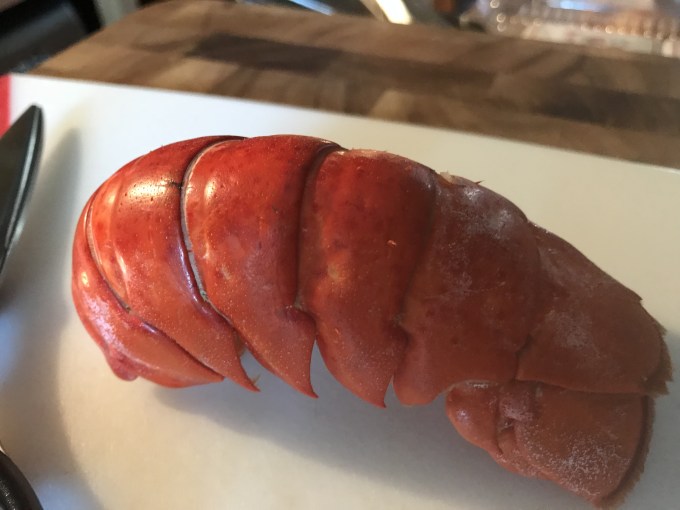
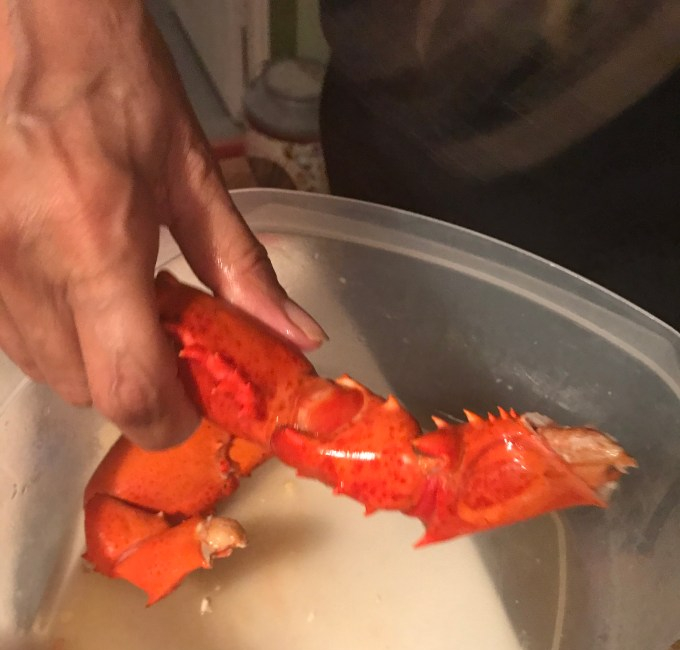
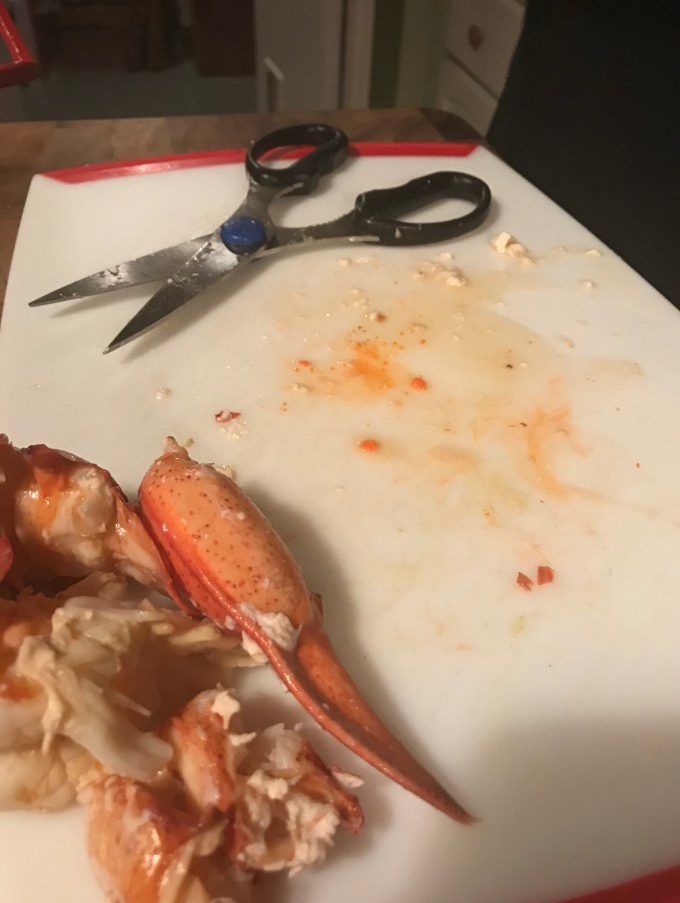
Once cooled, take off the rubber bands from the claws. I remove the arms with the claws. Next, I twist off the tail to release it from the body, also known as the thorax. Discard the thorax.
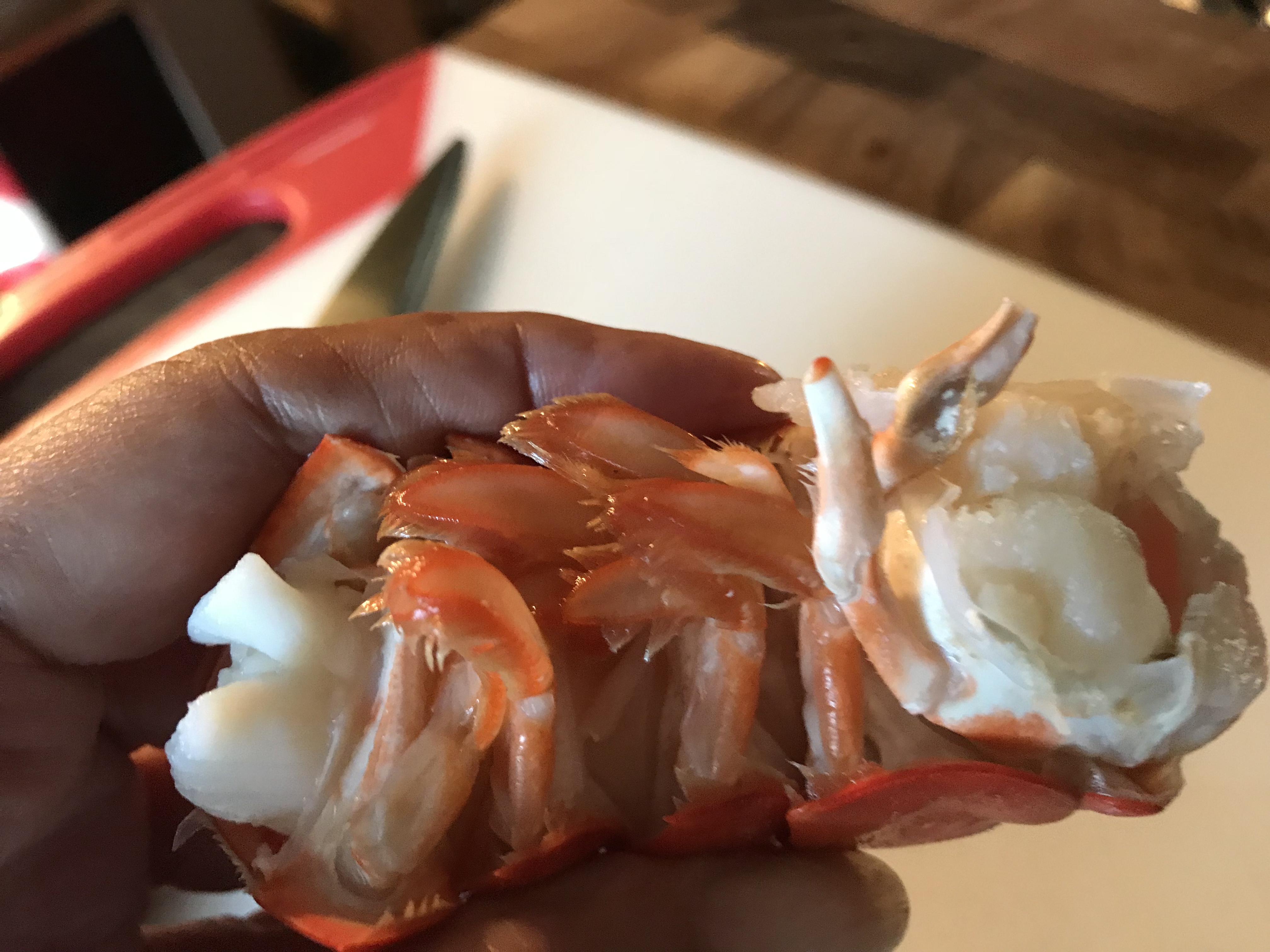
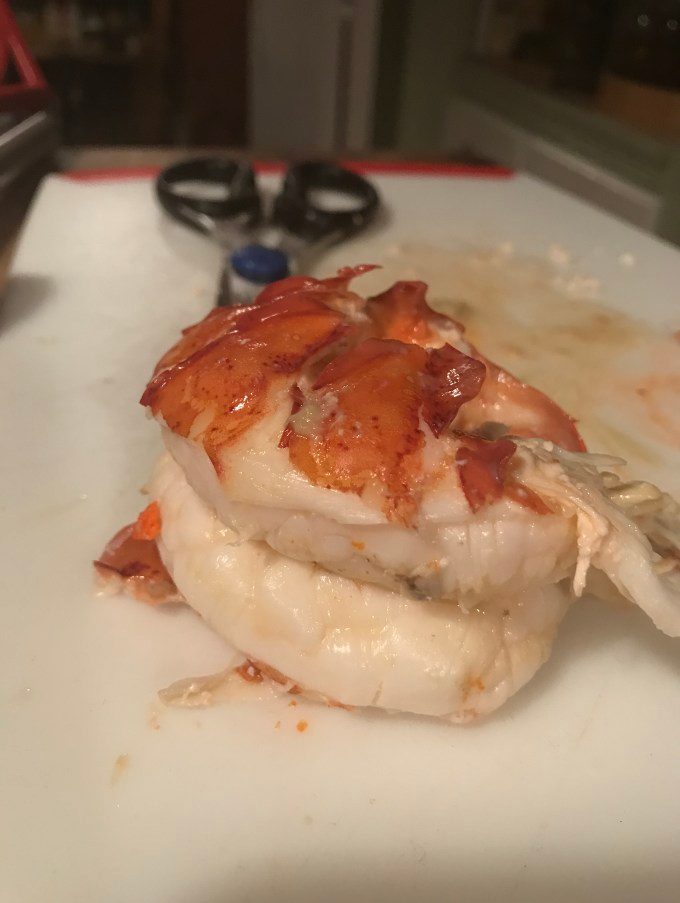
There are two ways you can remove the meat from the tail. The first is to bend it in a backward direction. Now the very end of the tail meat is showing. Use a pair of scissors and cut down the inner side of the tail to release the meat. The other way is to squeeze the tail together until you hear the backside snap. Turn the tail over, so the underbelly is facing upward. Using two hands, split the tail open.
There is a piece that needs to be removed on the outer side of the tail meat. It’s fibrous, just discard it. You’ll notice a green paste-like substance known as *Tomalley. Rinse off the *Tomalley using warm water. The tail is now clean and done. Next, the claws.
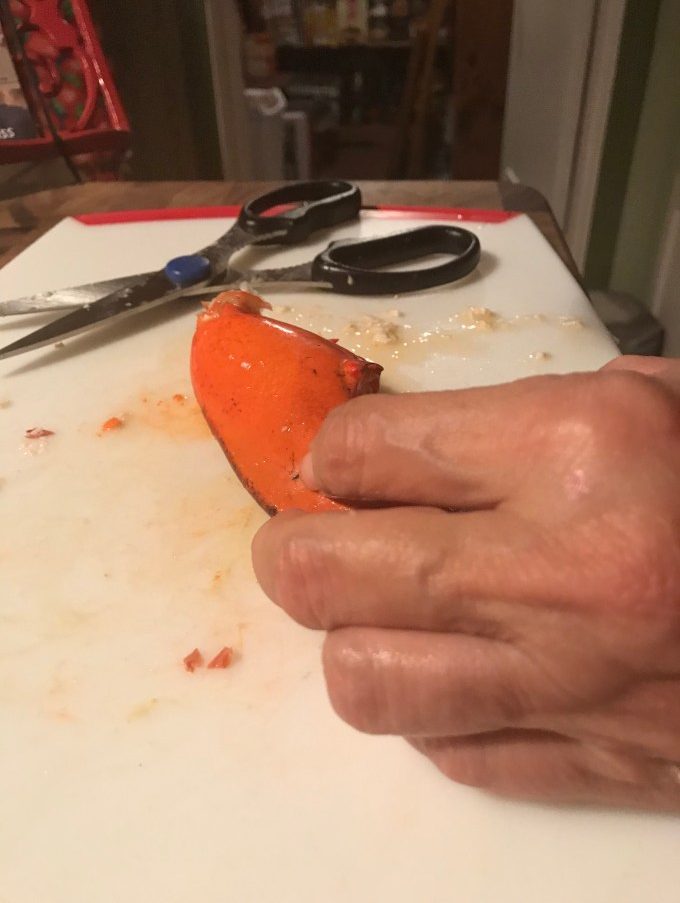
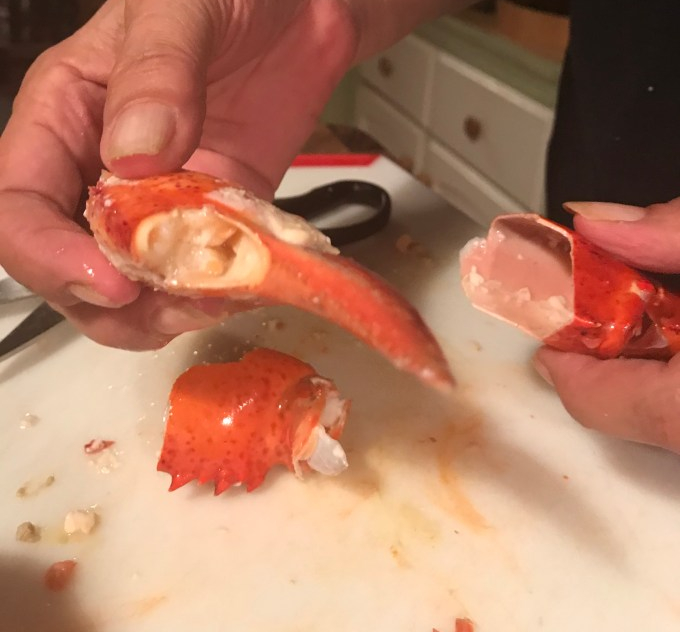
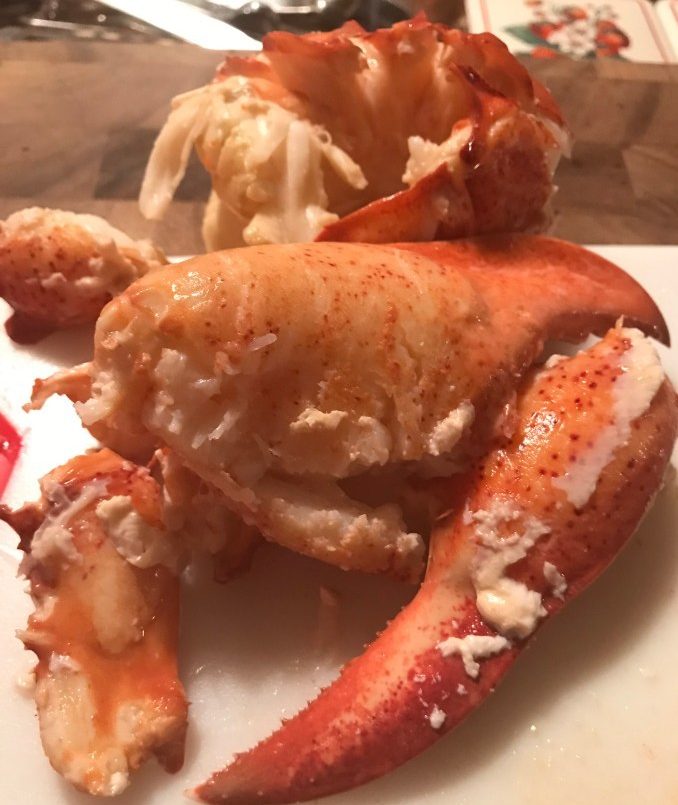
This is where a good pair of lobster crackers comes in handy. Another great tool is the meat mallet. One of the claws is larger and harder to break than the other. You may need some help with that one; that’s why I mentioned using a meat mallet.
Lay a towel over the larger claw and strike it once. That should put a crack into the claw and make it easier to remove the meat in one piece. When using the crackers, be careful not to crack the meat, just the shell. This is to ensure the meat will come out in one piece. The arms can be a bit tricky; they have knuckles, and meat can get caught. There are lobster picks available to make that job easier.
There you have it, my How to Cook and Open a Lobster.
Notes:
1) Fill a large bowl with warm water to remove the *Tomalley.
2) *Tomalley is a green substance (lobster paste) found in the body cavity of lobsters that fulfills the functions of both the liver and the pancreas.
3) The only changes for the final dishes in the last 2 pictures of this post are the addition of cooked lobster and fresh tarragon for a Seafood Pasta Over Linguine.
4) Linda Lou Hamel is not a nutritionist or dietitian, and any nutritional information shared is an estimate. If calorie count and nutritional value are important to you, I recommend running the ingredients through the online nutritional calculator of your choice. Calories and values can vary depending on the brands you choose.

How To Cook And Open A Lobster
Equipment
- 1 stockpot 8-16 quart with a tight-fitting lid
- 1 meat mallet
- 1 lobster cracker
- 1 lobster pick
- 1 cutting board Meat-safe
- 1 dish towel
Ingredients
- 1 2-pound lobster Live
- 1 1/2 quarts water
- 2 tbsps kosher salt
- 5 sprigs fresh tarragon
Instructions
- Let's get back to cooking and opening a lobster. Once I bring the lobster(s) home, I make sure they are kept in the bag with some crushed ice. You want to cook them as soon as possible. Before placing them into the pot of salted boiling water, I put them to sleep. This is something I learned working at a seafood restaurant.Place the lobster face (head) down on a counter, tail end in the air. Cross their arms and claws, then rub the backside (the thorax) of their shell, in an up and down motion. In about 45 seconds, their legs and antennae will stop moving. The lobster will then be asleep. Balancing on their heads, by themselves on the counter. If you want to see how this is done, just Google "How to put a lobster to sleep, and there are videos available.In a large stockpot of boiling salted water, add the sprigs of fresh tarragon. Next, I place the sleeping lobster, headfirst, immediately into the pot. You'll notice that the lobster is not completely submerged. I prefer to let the steam, along with the water, cook the lobster. Place a tight-fitting lid on the pot. Using a dishtowel, I hold on to the lid for about 10 seconds before letting go.Once cooked, I lift the lobster using large tongs to release any excess water. Next, I place the lobster in a large plastic container to cool before removing the meat.Once cooled, take off the rubber bands from the claws. I remove the arms with the claws. Next, I twist off the tail to release it from the body, also known as the thorax. Discard the thorax.There are two ways you can remove the meat from the tail. The first is to bend it in a backward direction. Now the very end of the tail meat is showing. Use a pair of scissors and cut down the inner side of the tail to release the meat. The other way is to squeeze the tail together until you hear the backside snap. Turn the tail over, so the underbelly is facing upward. Using two hands, split the tail open.There is a piece that needs to be removed on the outer side of the tail meat. It's fibrous, just discard it. You'll notice a green paste-like substance known as *Tomalley. Rinse off the *Tomalley using warm water. The tail is now clean and done. Next, the claws.This is where a good pair of lobster crackers comes in handy. Another great tool is the meat mallet. One of the claws is larger and harder to break than the other. You may need some help with that one; that's why I mentioned using a meat mallet.Lay a towel over the larger claw and strike it once. That should put a crack into the claw and make it easier to remove the meat in one piece. When using the crackers, be careful not to crack the meat, just the shell. This is to ensure the meat will come out in one piece. The arms can be a bit tricky; they have knuckles, and meat can get caught. There are lobster picks available to make that job easier.There you have it, my How to Cook and Open a Lobster.

Notes
 1) Fill a large bowl with warm water to remove the *Tomalley.
2) *Tomalley is a green substance (lobster paste) found in the body cavity of lobsters that fulfills the functions of both the liver and the pancreas.
3) The only changes for the final dishes in the last 2 pictures of this post are the addition of cooked lobster and fresh tarragon for a Seafood Pasta Over Linguine.
4) Linda Lou Hamel is not a nutritionist or dietitian, and any nutritional information shared is an estimate. If calorie count and nutritional value are important to you, I recommend running the ingredients through the online nutritional calculator of your choice. Calories and values can vary depending on the brands you choose.
1) Fill a large bowl with warm water to remove the *Tomalley.
2) *Tomalley is a green substance (lobster paste) found in the body cavity of lobsters that fulfills the functions of both the liver and the pancreas.
3) The only changes for the final dishes in the last 2 pictures of this post are the addition of cooked lobster and fresh tarragon for a Seafood Pasta Over Linguine.
4) Linda Lou Hamel is not a nutritionist or dietitian, and any nutritional information shared is an estimate. If calorie count and nutritional value are important to you, I recommend running the ingredients through the online nutritional calculator of your choice. Calories and values can vary depending on the brands you choose.https://lindalouhamel.com/2019/07/10/summer-time-flowers-and-herbs/
https://lindalouhamel.com/2020/08/17/pasta-salad-with-lobster-and-grilled-corn/
https://lindalouhamel.com/2016/04/18/shrimp-scampi-over-linguine/




Loved your recipe 🙂